 XHLUX
XHLUX

Inhoudsopgave
- What Is Modular Linear Lighting?
- How Modular Linear Lighting Works
- Key Benefits of Modular Linear Lighting
- Typical Applications of Modular Linear Lighting
- Modular Linear Lighting vs Traditional Linear Lighting
- How to Choose the Right Modular Linear Lighting System
- Design Tips for Modular Linear Lighting
- Future Trends: Modular + Smart Lighting Systems
- Data Overview: Performance Comparison
- Conclusion
- FAQ About Modular Linear Lighting
- 1. What makes modular linear lighting different from regular LED strips?
- 2. Can modular linear lights be customized in shape and length?
- 3. Is modular linear lighting compatible with smart systems like DALI or Tuya?
- 4. How energy efficient are modular systems?
- 5. Are modular linear lights suitable for residential use?
Lighting has evolved far beyond basic illumination. In today’s architectural and interior design world, lighting defines emotion, rhythm, and spatial hierarchy. Among all types of modern lighting, modular linear lighting has become a favorite choice for designers and architects due to its unmatched flexibility, clean aesthetics, and adaptability.
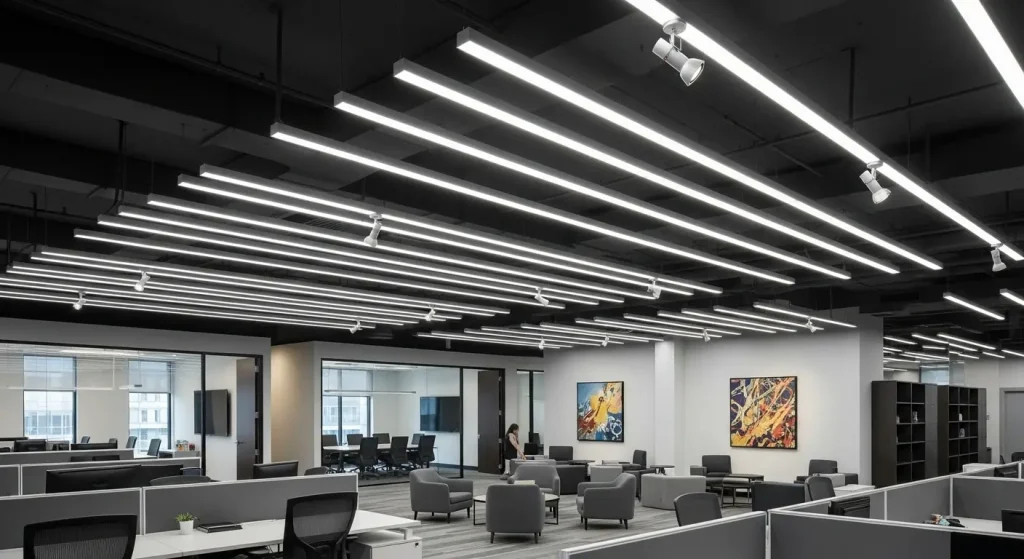
Modular linear systems allow spaces to be customized, reconfigured, and optimized with ease — making them perfect for offices, retail stores, hotels, and residential projects.
But what makes modular linear lighting so powerful? How does it actually work? And most importantly, how can it elevate your project’s design and performance?Let’s dive into the ultimate guide.
What Is Modular Linear Lighting?
Modular linear lighting is a lighting system composed of multiple connectable modules that can be assembled into various shapes, lengths, and lighting effects. Each module can act as an independent light or be combined with others to form a continuous, seamless illumination line.
The core philosophy behind modular systems is flexible design, expandability, and easy customization.
Common Module Types
Modular systems offer different configurations to fit architectural layouts:
- Straight sections for linear runs
- L-shaped or T-shaped connectors for corners and intersections
- Cross-shaped connectors for grid ceilings
- Curved or ring modules for creative or decorative layouts
These components allow designers to create unique lighting compositions — from geometric grids to flowing organic patterns — without custom fabrication.
How Modular Linear Lighting Works
1. Modular Structural Design
Each modular component is engineered for quick connection and disassembly. Modules are typically joined through:
- Magnetic connectors for easy tool-free installation
- Clip or latch systems for secure mechanical connection
- Conductive joints that simultaneously connect the power supply and signal control
Dit plug-and-play architecture means installers can modify, extend, or service the lighting system in minutes — saving both time and labor.
2. Optical and Electrical System
Modular linear lighting operates using low-voltage DC systems (often 48V) for safety and efficiency. A magnetic track or linear rail acts as both the power carrier En mounting base, enabling multiple lighting modules to attach and function simultaneously.
Modules can integrate various optical accessories such as:
- Diffusers for soft ambient lighting
- Lenses for focused beams
- Grilles or baffles for anti-glare control
- Reflectors for enhanced light distribution
This allows precise control over beam angles, luminance, and visual comfort, adapting perfectly to diverse project requirements.
3. Smart Control Systems
Modern modular systems go beyond static lighting. They often integrate smart lighting protocols including:
- DALI (Digital Addressable Lighting Interface)
- 0–10V dimming
- Tuya Smart / Bluetooth Mesh control
- Zigbee and Wi-Fi integrations
These systems enable:
- Scene-based lighting control
- Brightness and color temperature adjustment
- Scheduling and automation
- Remote management via smartphone apps
With smart modular lighting, you can create adaptive environments — from productivity-focused office lighting to cozy residential ambiance — all from one system.
Key Benefits of Modular Linear Lighting
1. Superior Design Flexibility
Modular linear lighting offers endless configuration possibilities.
You can freely combine straight, L-shaped, U-shaped, or ring modules to match your architectural layout. Whether it’s a minimalist office corridor or a complex retail ceiling, modular lighting adjusts to fit.
It empowers designers to “draw with light” — turning illumination into a true architectural element.
2. Easy Installation and Maintenance
Modular systems use pre-fabricated connectors En magnetic mounting, significantly reducing installation time.
If one module fails, it can be replaced individually without disassembling the entire setup — minimizing maintenance costs.
3. Balanced Aesthetics and Functionality
Each module can serve a unique role — from accent lighting to task illumination or ambient background light.
The result is a perfectly layered lighting experience that enhances both functionality and spatial design.
4. Smart Energy Efficiency
Paired with intelligent control systems, modular linear lighting automatically adapts to occupancy, daylight, and time schedules.
This dynamic dimming not only improves comfort but can also reduce energy consumption by 30–50% compared to traditional fixed lighting.
Typical Applications of Modular Linear Lighting
| Application | Key Features | Recommended Module Configuration |
|---|---|---|
| Office Spaces | Flexible zoning, reduced glare | Straight + L-shape + Anti-glare modules |
| Retail Stores | Product highlighting and dynamic layouts | Spot modules + Magnetic rail system |
| Hotel Lobbies | Layered ambiance and elegance | Circular + Curved + Indirect light modules |
| Residential Interiors | Modern minimalist aesthetics | Recessed + Suspended modules |
| Exhibition & Galleries | Focused illumination for displays | Adjustable beam modules + Smart control |
Modular systems allow designers to adapt lighting layouts easily as interior layouts evolve — ideal for commercial and creative spaces.
Modular Linear Lighting vs Traditional Linear Lighting
| Functie | Modular Linear System | Traditional Linear Lighting |
|---|---|---|
| Flexibility | High – customizable shapes and sizes | Fixed size, limited layouts |
| Installation | Quick magnetic or clip connection | Complex wiring and mounting |
| Onderhoud | Replaceable modules | Entire fixture replacement |
| Smart Control | Supports DALI / Tuya / Bluetooth | Manual on/off control |
| Aesthetic Design | Seamless integration, modern look | Visible joints, limited design options |
In short, modular lighting is the evolution of traditional linear systems — smarter, cleaner, and infinitely adaptable.
How to Choose the Right Modular Linear Lighting System
To select the ideal modular linear system, consider the following factors:
- Project Purpose:
- Office → Focused, low-glare lighting
- Retail → Flexible, directional lighting
- Hospitality → Decorative and ambient lighting
- Space Layout:
Analyze ceiling height, wall geometry, and light reflection surfaces to choose the right module combinations. - Mounting Method:
- Recessed for clean architectural integration
- Suspended for open ceiling spaces
- Surface-mounted for simple renovations
- Control Type:
Match system compatibility with DALI, Tuya Smart, or Bluetooth Mesh based on your automation preferences. - LED Quality:
Always choose modules with high CRI (>90), efficient drivers, and flicker-free performance voor visueel comfort.
Design Tips for Modular Linear Lighting
- Align lighting modules with architectural lines to reinforce structure and rhythm.
- Maintain consistent illuminance levels (300–500 lux) in work areas.
- Gebruik anti-glare optics (UGR<19) to improve comfort.
- Combine direct and indirect modules to enhance depth and ambiance.
- Integrate scene presets through smart control for different activities — such as meeting mode, exhibition mode, or relaxing mode.
Future Trends: Modular + Smart Lighting Systems
The future of lighting is modular, intelligent, and sustainable.
Here’s what’s coming next:
- IoT Integration: Lights connected via cloud platforms for remote control and energy monitoring.
- AI-driven Lighting: Systems that adjust brightness and color temperature automatically based on user behavior.
- Green Building Design: Modular systems supporting LEED and WELL certifications.
- Sustainable Components: Recyclable materials and replaceable modules extending product lifespan.
Modular linear lighting is not just a product — it’s a platform for the next generation of human-centric, sustainable illumination.
Data Overview: Performance Comparison
| Metric | Modular Linear Lighting | Traditional Linear Lighting | Improvement (%) |
|---|---|---|---|
| Energy Efficiency (lm/W) | 120–140 | 90–100 | +35% |
| Installation Time (min/m) | 5–10 | 20–30 | -60% |
| Maintenance Cost (per year) | Low (replace module only) | High (replace entire fixture) | -50% |
| Design Flexibility Score (1–10) | 10 | 5 | +100% |
| Smart Control Compatibility | Full (DALI, Tuya, BLE) | Beperkt | — |
Source: Lighting Design Research Center, 2024 Industry Report.
Conclusion
Modular linear lighting offers unmatched flexibility, visual harmony, and technological innovation.
It adapts to any space, grows with your design needs, and empowers you to create light as part of your architecture.
Whether you’re designing a minimalist office, a luxurious hotel, or a creative exhibition hall, modular lighting provides the perfect balance of functionality and beauty.
👉 Contact us today to discover our Modular Linear Lighting Solutions, request a free sample, or get a custom lighting layout plan for your project.
Your space deserves lighting that evolves with it — intelligent, modular, and timeless.
FAQ About Modular Linear Lighting
1. What makes modular linear lighting different from regular LED strips?
Unlike simple LED strips, modular linear lighting systems offer structural flexibility, professional optics, and smart controls, making them ideal for architectural and commercial environments.
2. Can modular linear lights be customized in shape and length?
Yes. Modules can be connected in various patterns — linear, grid, circular, or custom — to perfectly match your design vision.
3. Is modular linear lighting compatible with smart systems like DALI or Tuya?
Absolutely. Most modern systems support DALI, 0-10V, Tuya Smart, and Bluetooth Mesh protocols for seamless smart control.
4. How energy efficient are modular systems?
With high-efficiency LEDs and intelligent dimming, modular systems can reduce energy use by 30–50% compared to conventional lighting.
5. Are modular linear lights suitable for residential use?
Yes. Their minimalist appearance, easy installation, and customizable layouts make them perfect for modern homes and apartments as well.