 XHLUX
XHLUX

Inhoudsopgave
- 1. What Is a COB LED Downlight? (Definition and Working Principle)
- 2. Why Choose COB LED Downlights? (Core Advantages)
- 3. How to Choose the Right COB LED Downlight for Your Project
- 4. COB Downlight Structure and Technical Breakdown
- 5. Key Parameters to Evaluate Before Procurement
- 6. Applications of COB LED Downlights in Real Projects
- 7. How to Identify a Reliable COB Downlight Manufacturer
- 8. Example of a Professional COB Downlight Supplier (Template Section)
- 9. Common Questions About COB LED Downlights
- 10. Conclusion
- 11. COB Downlight Adoption 2025 (Data Table)
Lighting is one of the most important factors in architectural design and commercial spaces. The right downlight not only enhances visual comfort but also defines the aesthetic tone of a project. Among modern LED solutions, the COB LED Downlight (Chip on Board) has become the standard choice for professional lighting designers, contractors, and distributors seeking performance, reliability, and visual consistency.
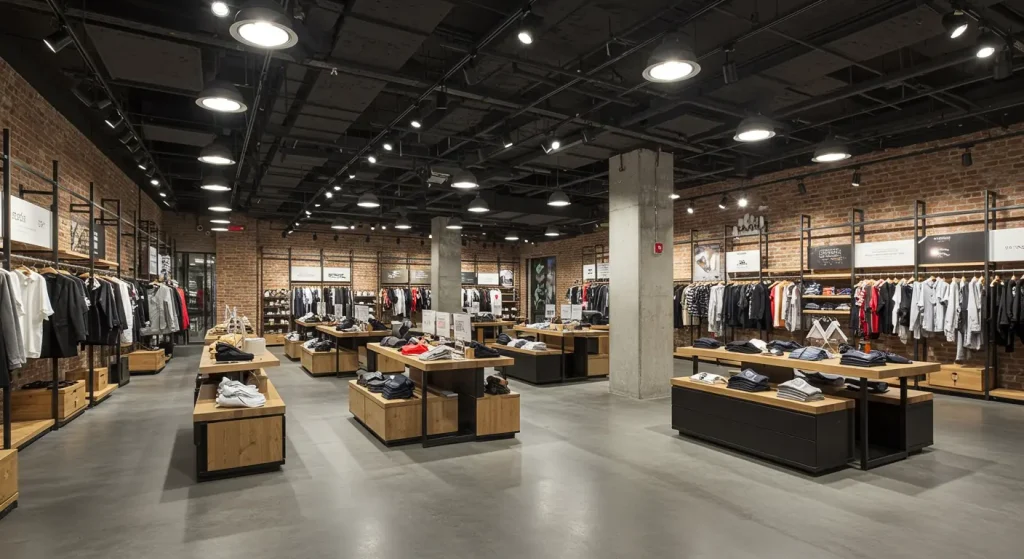
This complete guide explains what COB LED downlights are, their advantages, how to select the best model for your project, and what to look for in a manufacturer.
1. What Is a COB LED Downlight? (Definition and Working Principle)
COB (Chip on Board) refers to a high-density LED packaging technology in which multiple LED chips are mounted directly onto a single substrate, forming a compact light-emitting surface.
Unlike SMD LEDs, which use multiple discrete chips placed separately on a circuit board, COB LEDs produce a single, uniform beam without visible multiple light points.
Key Characteristics:
- High luminous efficiency: Better energy conversion compared to traditional SMDs.
- Uniform light output: No multiple shadowing or spotting effects.
- Improved thermal management: Direct substrate bonding improves heat transfer.
- High color rendering (CRI >90): Ideal for retail, galleries, and premium interiors.
| Functie | COB LED | SMD LED |
|---|---|---|
| Light Source Density | High (compact chip array) | Low (dispersed chips) |
| Beam Quality | Uniform, focused | Soft, diffuse |
| Heat Dissipation | Uitstekend | Average |
| Applications | Spot / Accent / Downlight | Panel / Strip / Ambient lighting |
2. Why Choose COB LED Downlights? (Core Advantages)
COB technology has redefined the standards for architectural and commercial lighting. Below are the main benefits that make COB downlights a preferred solution for professional projects.
- High CRI (Color Rendering Index >90):
Reproduces true colors of materials, artworks, and merchandise — crucial for retail stores and galleries. - High Efficacy (Up to 120 lm/W):
Converts energy into light efficiently, reducing operational costs and environmental impact. - Low Glare (UGR <19):
Carefully designed reflectors or lenses ensure visual comfort in offices and hospitality settings. - Accurate Beam Control (15°, 24°, 36°):
Allows precise focus for accent lighting or general illumination. - Superior Thermal Management:
Die-cast aluminum housing and copper heat pipes ensure stable temperature and long lifespan. - Flexible Control Compatibility:
Supports Triac, 0–10V, DALI, and smart lighting systems (Bluetooth / Zigbee).
3. How to Choose the Right COB LED Downlight for Your Project
When choosing a COB downlight, consider the project environment, lighting function, and control requirements.
(1) Select Optical Parameters by Application Type
| Project Type | Recommended Power | Beam Angle | CCT Range | Application Notes |
|---|---|---|---|---|
| Hotel Lobby / Restaurant | 10–25 W | 24° / 36° | 2700–3000 K | Creates warm, welcoming atmosphere |
| Retail Store / Showroom | 15–35 W | 15° / 24° | 3000–4000 K | Highlights merchandise, enhances contrast |
| Office / Commercial Area | 12–20 W | 60° | 4000 K | Uniform, low-glare lighting |
| Residential / Villa | 5–15 W | 24° / 36° | 3000 K | Combines functional and decorative lighting |
(2) Balance CRI and Luminous Efficiency
- CRI >90 is recommended for most commercial and hospitality spaces.
- For premium retail or art exhibitions, CRI >95 ensures superior color fidelity.
(3) Choose the Right Dimming System
- Existing Control Infrastructure: Select DALI or 0–10 V compatible models.
- Small or Residential Projects: Triac dimming offers simple integration and lower cost.
(4) Evaluate Thermal and Electrical Reliability
- Review LM-80 and TM-21 lifetime reports.
- Ensure consistent performance under extended operation (50,000+ hours).
4. COB Downlight Structure and Technical Breakdown
A well-engineered COB downlight combines precise optics, advanced electronics, and thermal stability.
Core Components:
- COB Chip Module:
Dense multi-chip array bonded on aluminum substrate for uniform luminous output. - Optical System:
Reflector or lens controls beam angle; black baffles or honeycomb filters reduce glare. - Driver:
High Power Factor (>0.9) and flicker-free constant-current IC driver. - Heat Sink:
Aerospace-grade aluminum with multi-fin structure for effective dissipation. - Mounting System:
Recessed, surface-mounted, or adjustable gimbal design options. - Protection Level:
IP20–IP44 suitable for indoor commercial environments.
| Component | Specification | Function |
|---|---|---|
| COB Chip | CREE / Citizen / Bridgelux | High CRI, consistent CCT |
| Reflector | 15°–60° beam | Focused beam control |
| Bestuurder | 220–240 V AC, PF>0.9 | Flicker-free dimming |
| Heat Sink | Die-cast aluminum | Extends lifespan |
| CCT Range | 2700 K–6500 K | Tunable ambience |
5. Key Parameters to Evaluate Before Procurement
For B2B buyers and project managers, product validation is critical before large-scale purchasing.
| Category | Key Metric | Importance |
|---|---|---|
| Optische prestaties | Luminous efficacy, CRI, CCT | Determines brightness and color quality |
| Driver Performance | PF>0.9, THD<15%, flicker rate | Ensures efficiency and safety |
| Optical Control | Beam angle, UGR, anti-glare optics | Affects visual comfort |
| Mechanical Craftsmanship | Aluminum finish, frame precision | Impacts aesthetic integration |
| Certificeringen | CE, ETL, SAA, LM-80 | Guarantees export compliance |
| OEM Flexibility | Custom logo, optical redesign | Supports brand differentiation |
Testing should include IES photometric data, aging tests, and thermal performance verification.
6. Applications of COB LED Downlights in Real Projects
COB LED downlights are versatile and adaptable across many sectors.
(1) Hotel Lighting
Soft, uniform light with low glare enhances comfort and luxury.
(2) Retail Lighting
High CRI and directional beams increase visual appeal of products and textures.
(3) Office Lighting
Balanced illumination reduces eye strain and improves productivity.
(4) Residential Lighting
COB downlights offer warmth and sophistication for modern interior designs.
Example Visualization (Recommended):
Show a side-by-side comparison of a retail store lit with COB 3000 K (warm) vs. 4000 K (neutral).
7. How to Identify a Reliable COB Downlight Manufacturer
Choosing a dependable partner ensures long-term product consistency and smooth project execution.
| Evaluatieaspect | Checkpoints | Recommendation |
|---|---|---|
| Technical Expertise | In-house optical design, R&D team | Prefer ODM-capable suppliers |
| Quality Management | ISO 9001, photometric testing lab | Guarantees uniform production |
| Certification System | CE / ETL / SAA / LM-80 / IES | Ensures international compliance |
| OEM / ODM Services | Logo print, housing redesign | Enables brand differentiation |
| After-Sales Service | Warranty period, response time | Look for 3–5 year coverage |
When evaluating suppliers, request product datasheets, IES files, and photometric test reports.
8. Example of a Professional COB Downlight Supplier (Template Section)
Key Strengths:
- Expertise: Over a decade in commercial and architectural LED lighting manufacturing.
Performance:
- High CRI COB chips (Ra >90 / Ra >95 optional)
- Efficacy up to 120 lm/W
- Flicker-free driver design
- Beam angles 15°–60°
- OEM/ODM Service: Private mold customization, fast sampling (<10 days).
- Certifications: CE, ETL, SAA, RoHS.
Project References:
- Hotel installations in Europe
- Retail showrooms in Australia
- Luxury villa lighting projects in the Middle East
9. Common Questions About COB LED Downlights
| Vraag | Antwoord |
|---|---|
| Vraag 1: What is the difference between COB and SMD downlights? | COB has a concentrated light source producing uniform beams, while SMD uses multiple smaller chips for diffused light. |
| Vraag 2: What types of projects use COB downlights? | Hotels, retail stores, offices, museums, and residential interiors. |
| Vraag 3: Are COB downlights dimmable? | Yes — compatible with Triac, 0–10V, and DALI systems. |
| Vraag 4: Can they be customized for OEM projects? | Absolutely. Structure, optics, and branding can all be tailored. |
| Vraag 5: What is the typical lifespan? | Around 50,000 hours, depending on driver quality and thermal design. |
10. Conclusion
COB LED downlights represent the future of efficient, high-quality illumination for architectural and commercial environments.
When selecting a model or supplier, always focus on:
- Optical performance (CRI, CCT, beam control)
- Electrical stability (flicker-free, PF>0.9)
- Structural design (heat dissipation, anti-glare system)
- Certification and OEM capability
Partnering with a professional manufacturer ensures consistent quality, efficient delivery, and lighting that enhances every project’s success.
Recommended Next Steps
✅ Request a quote for your next project
✅ Download COB Downlight Product Catalog (PDF)
✅ Request free samples for performance testing
11. COB Downlight Adoption 2025 (Data Table)
| Region | Market Share (2023) | Growth Rate (2023–2025) | Key Applications |
|---|---|---|---|
| Europe | 32% | +8.9% CAGR | Hospitality, retail, museums |
| Middle East | 21% | +10.4% CAGR | Villas, luxury hotels |
| Australia | 15% | +9.6% CAGR | Commercial offices, showrooms |
| Asia-Pacific | 25% | +11.2% CAGR | Mixed commercial projects |
| North America | 7% | +6.8% CAGR | Corporate and retail chains |
Source: Global Architectural Lighting Report 2025 (IHS / Lighting Europe)
The data confirms growing adoption of high-CRI COB LED technology across architectural and hospitality sectors.