 XHLUX
XHLUX

In today’s commercial spaces, lighting is no longer just about providing brightness. It plays a crucial role in reducing energy consumption, lowering operating costs, supporting sustainability goals, and enhancing brand image. With rising electricity prices and stricter environmental regulations, energy-efficient lighting has become a priority for businesses across industries.
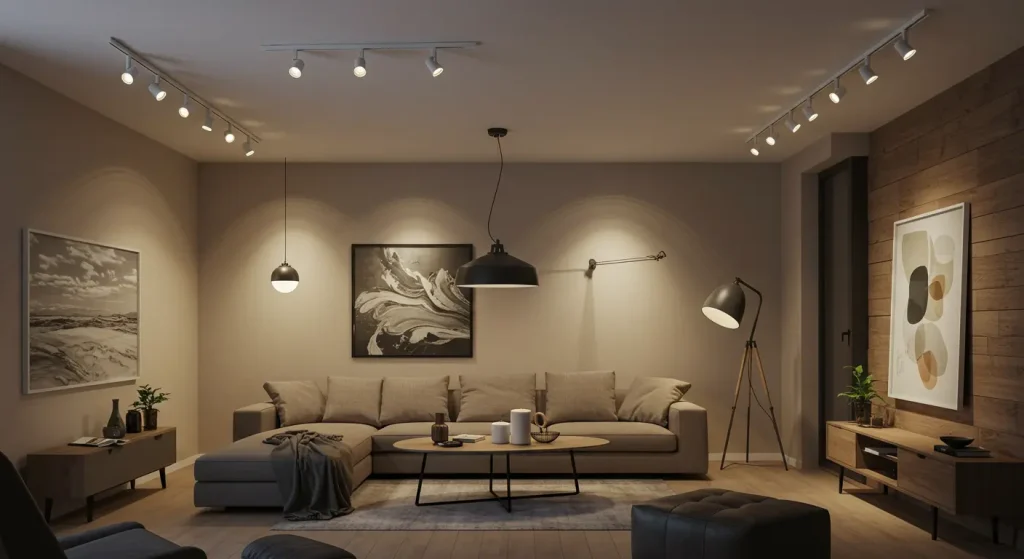
For offices, retail stores, restaurants, and hotels, choosing the right lighting fixtures can save money while creating a comfortable, visually appealing environment. The question is: how do you choose the right energy-efficient indoor lighting for your space?
Key Benefits of Energy-Efficient Lighting
- Lower electricity bills and operational costs
LED lighting can reduce energy use by 50–80% compared to halogen or fluorescent lamps. - Longer lifespan and reduced maintenance
Many LED fixtures last up to 50,000 hours, meaning fewer replacements and less downtime. - Improved lighting quality
Energy-efficient lights provide stable brightness, high color rendering (CRI), and comfortable illumination. - Sustainability and certifications
Using certified fixtures (CE, RoHS, Energy Star) supports green building standards and boosts corporate image.
Common Types of Energy-Efficient Fixtures
- LED-railverlichting – flexible and directional, ideal for retail and gallery spaces.
- LED-downlights – perfect for offices, hotels, and shopping malls.
- LED Linear Lights – provide a modern look and even illumination in workspaces.
- Smart Lighting Systems – motion sensors, dimmable options, and IoT integration.
Key Factors to Consider When Choosing Fixtures
- Match lighting with space function (restaurant, office, hotel lobby, retail).
- Check lumen output, wattage, and efficiency ratio.
- Select suitable color temperature (2700K–3000K for warm ambiance, 4000K–5000K for workspaces).
- Evaluate installation method and maintenance cost.
- Look for certifications (CE, RoHS, Energy Star) for quality assurance.
Common Mistakes to Avoid
- Choosing based on price only and ignoring long-term savings.
- Focusing too much on brightness while overlooking comfort and design.
- Forgetting dimming or smart control features.
- Ignoring aesthetic harmony with the interior design.
Real-World Application Examples
- Hotel lobby: LED linear lights reduced energy use by 40%.
- Office: Smart downlights improved focus and reduced fatigue.
- Restaurant: Dimmable track lights enhanced dining atmosphere.
Data Comparison Chart
Energy Savings of Different Lighting Technologies
| Fixture Type | Average Lifespan (hours) | Energy Use vs. Traditional | Maintenance Cost | Best Application |
|---|---|---|---|---|
| Incandescent Bulb | 1,000 | 100% baseline | Hoog | Rarely used today |
| Halogen Lamp | 2,000 | 75% of incandescent | Medium | Decorative lighting |
| CFL (Fluorescent) | 8,000 | 30% of incandescent | Medium | Budget office lighting |
| LED Fixture | 25,000–50,000 | 20% of incandescent | Very Low | Office, retail, hotels |
| Smart LED System | 50,000+ | 15–20% of incandescent | Very Low | Premium, large projects |
FAQ About Commercial Light Fixtures Interior
Q1: How do I calculate the right brightness for my space?
Brightness is measured in lumens. For offices, aim for 300–500 lumens per square meter. For restaurants, 150–250 lumens/m² may be enough.
Q2: Are LED lights always the best choice?
Yes for most cases, but in certain decorative or artistic settings, halogen lamps are still used for warmer tones.
Q3: Do smart lighting systems really save more energy?
Yes. Sensors and timers prevent lights from being left on unnecessarily, often saving an extra 10–20% energy.
Q4: How important is the color temperature?
Very important. A warm white (2700K–3000K) creates a cozy ambiance, while cool white (4000K–5000K) supports concentration in offices.
Q5: What certifications should I look for?
Energy Star, CE, and RoHS are key. They ensure safety, efficiency, and compliance with environmental standards.
Conclusion
Energy-efficient indoor lighting is not just about saving electricity—it’s about creating a sustainable, comfortable, and future-proof space. Businesses that invest in smart, efficient fixtures enjoy lower costs, improved workplace performance, and a stronger environmental reputation.
👉 If you’re planning a lighting upgrade, consider reaching out to a Professional lighting supplier to design a solution tailored to your business needs.