 XHLUX
XHLUX
![ما هو ضوء المسار القابل للتعتيم ذو مؤشر تجسيد اللون العالي: أفضل دليل للألوان [2025]](https://xhlux.com/wp-content/uploads/2024/05/news.webp)
جدول المحتويات
- What is CRI (Color Rendering Index)? A Simple, Straight-Talk Explanation
- Why High CRI is a Non-Negotiable for Quality Lighting
- Bringing It All Together: The “Dimmable Track Light” Advantage
- The Deeper Dive: Beyond CRI – Understanding R9 and TM-30
- How to Choose Your High CRI Dimmable Track Light: A Buyer’s Checklist
- The Market for Quality Light: A Clear Trend
- Is High CRI Dimmable Track Lighting Worth the Investment?
Ever bought a navy-blue sweater at a store, only to get it home and realize it’s actually black? Or cooked a beautiful meal, rich with vibrant reds and greens, that somehow looks dull and unappetizing under your kitchen lights? You’re not imagining it. The culprit isn’t your eyes; it’s your lighting.
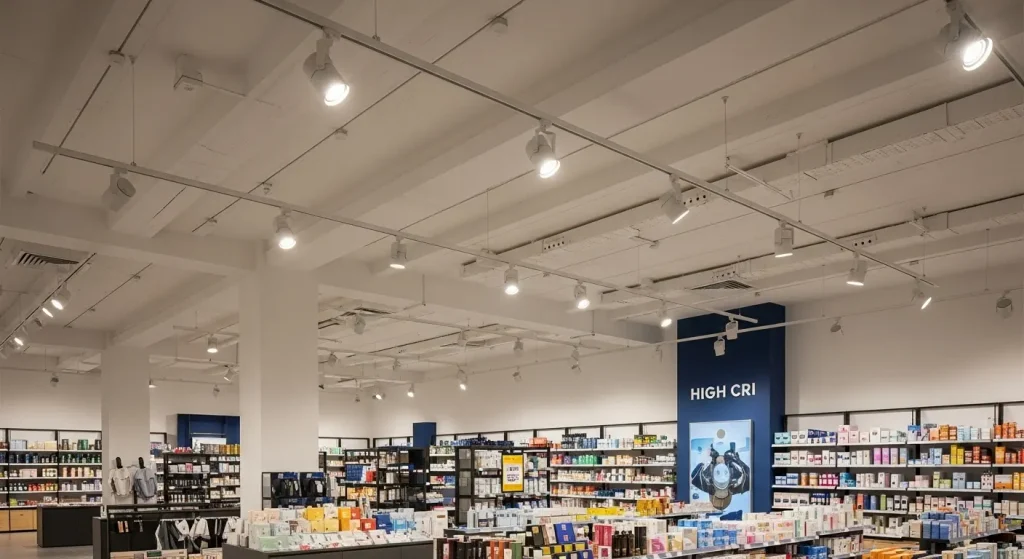
Welcome to the world of Color Rendering Index, or CRI. This is where we separate mediocre lighting from magnificent illumination. And when you combine this principle of color accuracy with the versatility of a track system, you get the High CRI Dimmable Track Light—a tool that designers, artists, and discerning homeowners use to reveal the world in its true, intended colors.
What is CRI (Color Rendering Index)? A Simple, Straight-Talk Explanation
Let’s cut right to the chase. مؤشر تجسيد اللون (CRI) is a quantitative measure of the ability of a light source to reveal the colors of various objects faithfully in comparison with a natural or ideal light source (like sunlight).
Think of it this way: CRI is a measure of a light’s “color accuracy” on a scale of 0 to 100.
- Sunlight has a perfect CRI of 100. It contains the full, balanced spectrum of visible light, so all colors under it appear natural and true.
- A low-CRI light source is missing certain wavelengths of color. When this light hits an object, the colors it can’t produce are simply not reflected back to your eye, making the object appear distorted, dull, or a completely different shade.
A High CRI Dimmable Track Light is, therefore, a fixture designed to produce light that is rich across the color spectrum, ensuring that the colors in your space—from the paint on your walls to the food on your plate to the art you cherish—look exactly as they are meant to.
The CRI Scale: What Do the Numbers Actually Mean?
To make this practical, here’s a simple breakdown of the CRI scale in a table.
| CRI Value | Quality Level | Typical Application & Result |
|---|---|---|
| مؤشر تجسيد اللون 95+ | Professional / Museum Grade | Essential for art galleries, medical facilities, and high-end retail. Provides the most faithful, true-to-life color reproduction possible. |
| CRI 90-95 | Excellent (“High CRI”) | The professional standard for quality homes, design studios, and boutiques. Colors appear rich, vibrant, and clearly defined. Skin tones look natural. |
| CRI 80-90 | Good (Standard) | Acceptable for general office and home use (e.g., hallways, storage). Most colors look fine, but some subtle shades may appear slightly “off.” |
| CRI < 80 | Poor / Utility Grade | Often found in older fluorescent tubes or cheap LEDs. Colors are noticeably washed out, dull, or distorted. Not recommended for living or work spaces. |
Why High CRI is a Non-Negotiable for Quality Lighting
Understanding the number is one thing, but what is the real-world impact of choosing a High CRI Dimmable Track Light? It’s about enhancing experience, creating value, and trusting what you see.
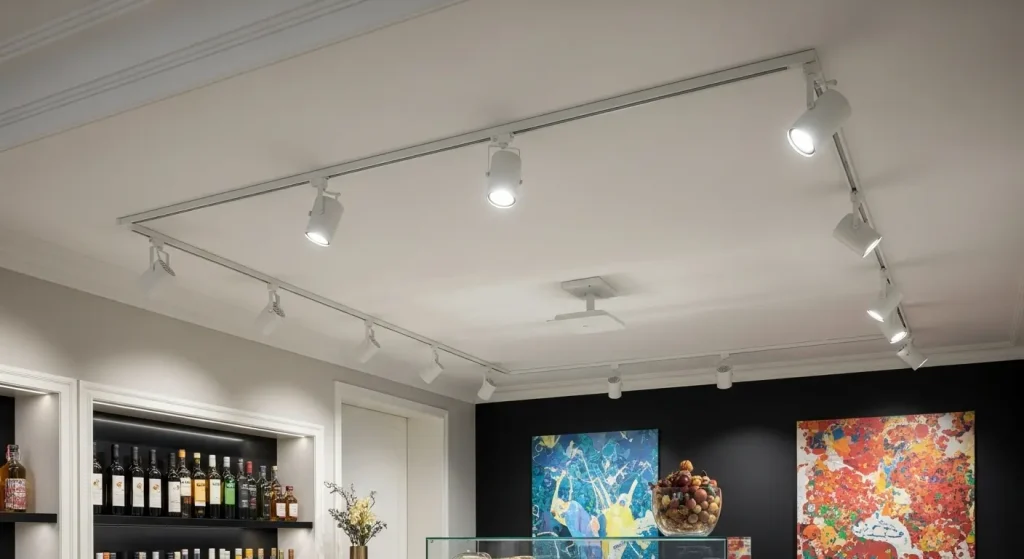
For Art and Photography: Seeing the Artist’s True Intent
This is the most critical application. An artist painstakingly chooses their color palette. A low-CRI light can completely misrepresent their work, dulling vibrant reds and shifting subtle blues. A high CRI track spotlight for art, specifically one with a high R9 value (more on that later), ensures that every brushstroke and hue is seen exactly as the artist intended. For galleries, museums, and private collectors, CRI 95+ is not a luxury; it’s a necessity for preservation and proper appreciation.
For Retail and Fashion: Reducing Returns and Driving Sales
Have you ever seen a “looks different at home” review for an item of clothing? Low CRI is often the culprit. In a fashion boutique, a cosmetics store, or a furniture showroom, accurate color representation is paramount.
- إضاءة ذات مؤشر تجسيد لوني عالٍ ensures customers see the true color of products, leading to higher purchasing confidence.
- It reduces costly returns from customers who feel the product color was misrepresented.
- Vibrant, accurately rendered products simply look more appealing and high-quality, which can directly impact sales. Studies in retail psychology have shown that quality of light is a key factor in consumer perception and behavior.
For Your Home: From a Chef’s Kitchen to a Designer’s Living Room
High CRI isn’t just for commercial spaces. It elevates everyday life.
- In the Kitchen: See the true colors of your ingredients. Is that steak perfectly seared? Are those vegetables fresh and vibrant? High CRI makes cooking a more visual, rewarding experience.
- In the Bathroom: Applying makeup under low-CRI light can lead to surprises when you step outside. High CRI ensures you see accurate skin tones and makeup colors.
- In Your Living Space: The carefully chosen colors of your paint, furniture, and decor will look exactly as you envisioned them, creating a richer and more cohesive interior design.
For Well-being: How True Colors Affect Mood and Perception
While harder to quantify, living in an environment with full-spectrum, high-quality light can impact our sense of well-being. A world of washed-out, dull colors can feel subtly draining, while a space filled with rich, true-to-life color feels more vibrant, natural, and stimulating.
Bringing It All Together: The “Dimmable Track Light” Advantage
So, we’ve established that high-quality light is crucial. Now, why pair it with a dimmable track system?
The Perfect Combination: High-Quality Light with Flexible Control
A High CRI Dimmable Track Light gives you the best of both worlds:
- Light Quality (CRI): Ensures what you see is accurate and beautiful.
- Light Control (Dimmable Track): Gives you full command over how you see it.
You can use a high-CRI spotlight to perfectly render the colors of a painting, and then dim it down to the precise, conservation-approved level. You can have bright, color-accurate task lighting over your kitchen island, and then dim it down to a soft, warm glow for dinner. This combination of quality and control is what defines modern, sophisticated lighting design.
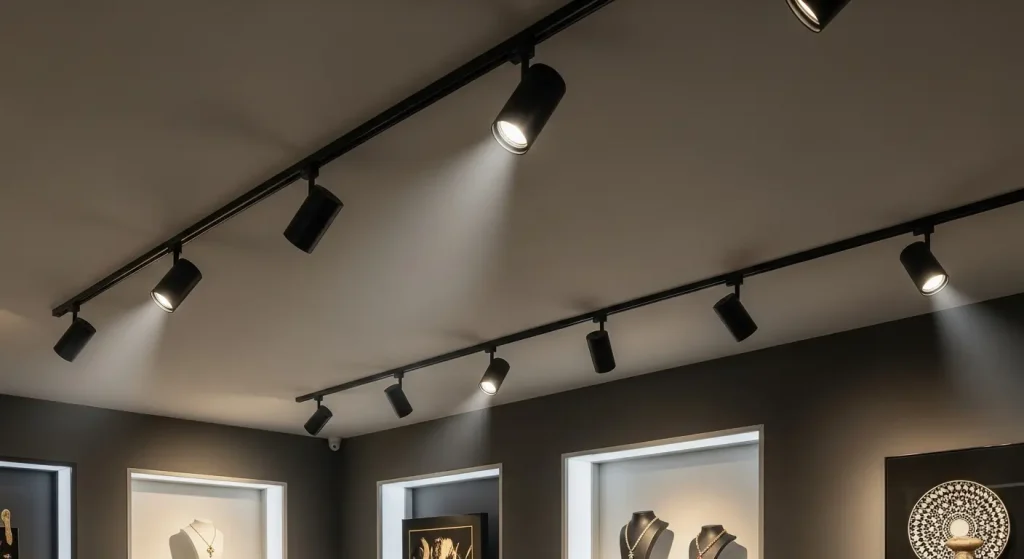
Choosing Your Dimming Protocol
The great news is that high-CRI LED drivers are available for all major dimming protocols. Your choice of a high-CRI spotlight does not limit your control options. The table below breaks down the common choices to help you decide.
| Dimming Method | الأفضل لـ | Pros | Cons |
|---|---|---|---|
| Phase-Cut (TRIAC/ELV) | Residential retrofits, simple setups. | Uses standard 2-wire mains wiring, making it easy to install with existing infrastructure. | High potential for flicker/buzz unless the dimmer and LED driver are perfectly matched. Performance can be inconsistent. |
| 0-10V | Commercial spaces, new builds wanting smooth performance. | Very smooth, reliable, and flicker-free dimming. A robust professional standard. | Requires running an extra pair of low-voltage control wires, which can be difficult in retrofits. |
| دالي | High-end commercial, galleries, smart buildings. | Ultimate precision with individual fixture control, status feedback, and advanced scene programming. | High system complexity and cost. Requires specialized DALI track, fixtures, and professional commissioning. |
| On-Board Smart (Wireless) | Smart homes, spaces needing flexible wireless control without new wiring. | Convenient app/voice control (e.g., Zigbee, Bluetooth). Individual control and digital grouping are easy. | Usually requires a compatible smart home hub/ecosystem. Reliability is dependent on your wireless network. |
You can select a dimmable track spotlight with high CRI that fits perfectly into the control system you’ve planned for your space.
The Deeper Dive: Beyond CRI – Understanding R9 and TM-30
For those who are serious about color, the conversation doesn’t stop at CRI. This is where you can see true lighting expertise.
- What is R9?
The standard CRI calculation is an average of 8 pastel color samples (R1-R8). It notably does not include a strong, saturated red. The R9 value is a separate score that specifically measures how accurately a light source renders deep red. Why does this matter? Many things—skin tones, wooden furniture, artwork, fresh produce—contain significant amounts of red. A light can have a CRI of 90, but a low R9, making reds look brownish or dull. For truly excellent color rendering, look for both a high CRI (90+) and a high R9 value (ideally 50+, with 90+ being exceptional). - What is TM-30?
Developed by the Illuminating Engineering Society (IES), TM-30 is a newer and more comprehensive method for evaluating color rendition. It uses 99 color samples instead of CRI’s 8 and provides more detailed data, including a Fidelity Index (Rf, similar to CRI) and a Gamut Index (Rg, which indicates color saturation). While CRI is still the industry shorthand, seeing TM-30 data on a spec sheet is a sign of a high-quality, forward-thinking manufacturer.
How to Choose Your High CRI Dimmable Track Light: A Buyer’s Checklist
Ready to shop with confidence? Here’s what to look for on the spec sheet.
- Check the CRI (and R9 if possible):
- Goal: CRI 90+ for excellent results.
- Pro Goal: CRI 95+ with an R9 value of 50+ for critical applications.
- Confirm Dimming Compatibility: Ensure the spotlight’s driver matches your control system (e.g., “TRIAC Dimmable,” “0-10V Dimmable,” “DALI,” “Zigbee”).
- Verify Physical Track Compatibility: Make sure the adapter fits your track (H, J, L, 3-Circuit, Magnetic, etc.).
- Select the Right Beam Angle and CCT: Choose the beam spread and color temperature that suit your application.
- Don’t Forget Lumens: Make sure the spotlight is bright enough for your needs, knowing you can always dim it down.
The Market for Quality Light: A Clear Trend
The demand for high-quality lighting is no longer a niche concern. As consumers and designers become more educated about the impact of lighting on ambiance, productivity, and well-being, the demand for high-CRI solutions has surged. Market research on the global LED lighting market consistently points to a shift from basic lumen output to “quality of light” metrics as a key driver of innovation and consumer choice. This trend is particularly strong in the architectural, retail, and hospitality sectors, where the quality of the environment is paramount. Investing in high-CRI lighting is no longer “gold plating”; it’s becoming the expected standard for any quality installation.
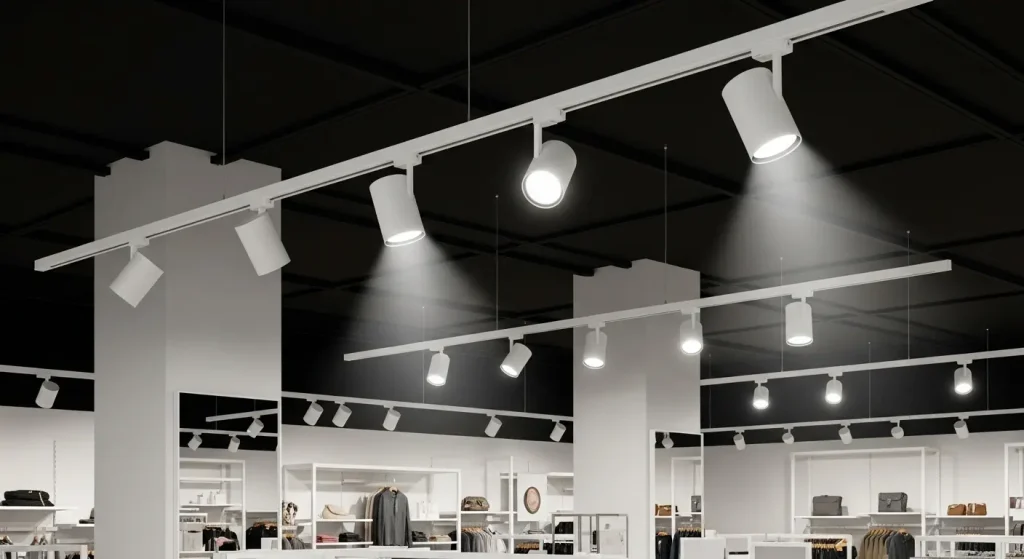
Is High CRI Dimmable Track Lighting Worth the Investment?
Is it worth seeking out and investing in a High CRI Dimmable Track Light system?
The answer is an unequivocal yes if:
- You are lighting art, photography, or high-end merchandise.
- Color accuracy is critical to your work or business (e.g., design studio, kitchen, salon).
- You are an interior designer or homeowner who values a rich, vibrant, and accurate color palette in your space.
- You simply want the best possible visual experience and refuse to settle for dull, washed-out colors.
The only scenario where standard CRI 80+ might be “good enough” is for purely functional, non-aesthetic spaces like a storage closet or utility room. For every other application, the visual improvement offered by high-CRI light is one of the most impactful upgrades you can make. It’s an investment in quality, in accuracy, and in the simple joy of seeing your world in its true, beautiful colors.
Your space deserves to be seen in the best possible light.
If you’re ready to experience the transformative power of high-fidelity color rendering, our team of lighting specialists is here to help. We can guide you to the perfect High CRI track lighting solution that meets the exacting demands of your project.
Contact us today for a professional consultation and let’s reveal the true colors of your world.