 XHLUX
XHLUX

جدول المحتويات
- Decoding DMX512: The Language of Light Shows, Now for Your Tracks
- Why Choose DMX for Track Lighting? The Power and Precision Proposition
- The Other Side of the Coin: Practical Realities of DMX Track Lighting
- DMX vs. The Architectural Lighting Titans: Where Does It Fit?
- Prime Applications for DMX Dimmable Track Lighting in 2025
- Navigating Your DMX Project: Tips for a Successful Implementation
- The Future of DMX in Architectural Illumination
- Is DMX Dimmable Track Lighting Your Star Performer?
Ever walked into a high-end store where the lighting seems to dance? Or a museum exhibit where colours subtly shift to evoke emotion? Or perhaps a restaurant where the ambiance transforms effortlessly from day to night? Chances are, you’ve witnessed the power of DMX Dimmable Track Lighting. This isn’t your average dimmer switch setup. DMX – or DMX512, to be precise – is the heavyweight champion of dynamic lighting control, born from the demanding world of stage and theatre, and now making serious waves in architectural and commercial track lighting.
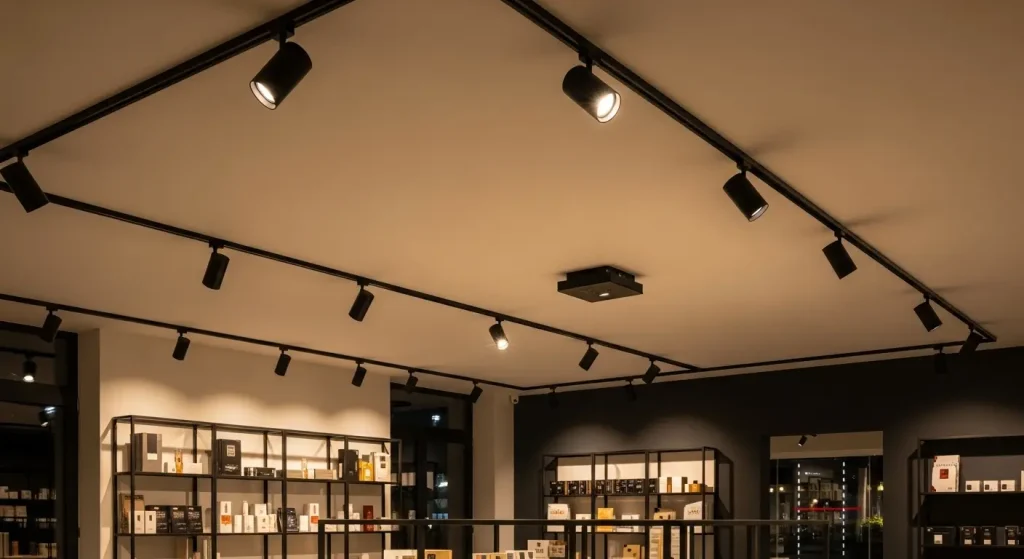
But let’s be honest, the term “DMX” can sound a bit intimidating, like something only a lighting pro with a complicated console could handle. Is it overkill for anything less than a rock concert? Or could it be the secret ingredient to making your next track lighting project truly spectacular?
Decoding DMX512: The Language of Light Shows, Now for Your Tracks
So, what exactly is this DMX thing? Let’s break it down without getting lost in the weeds.
From Stage to Space: A Quick History of DMX
DMX512 (Digital Multiplex with 512 pieces of information) was born in the late 1980s out of a need to standardize how stage lighting consoles talked to dimmers, fog machines, and intelligent lights. Before DMX, every manufacturer had its own proprietary protocol, leading to a compatibility nightmare for lighting designers. DMX brought order to that chaos, providing a robust, reliable digital language that everyone could understand. Its success in the demanding live entertainment industry paved the way for its adoption in architectural lighting, where designers craved the same level of dynamic control.
How DMX “Talks” to Lights: The Nitty-Gritty (Simplified)
Think of DMX as a high-speed digital messaging system specifically for lighting and effects. Here are the key concepts:
- Digital, Not Analog: Unlike 0-10V (analog voltage) or phase-cut dimming (chopping AC power), DMX sends packets of digital data.
- Universe: A single DMX “universe” consists of 512 control channels.
- Channels: Each channel can control one specific parameter of a light fixture – for example, the intensity of red, the intensity of green, the intensity of blue, overall brightness, pan, tilt, gobo selection, etc. Each channel has 256 possible values (0-255), allowing for fine-grained control. So, a simple white LED track light might use just one DMX channel for intensity. An RGB LED track light would use three channels (one for Red, one for Green, one for Blue). An RGBW (Red, Green, Blue, White) fixture would use four. A tunable white fixture (warm white to cool white) would typically use two.
- Addressing: Each DMX-controllable track light (or its DMX decoder) needs to be assigned a unique starting address within the DMX universe. This tells the fixture which channels of data it should listen to. For example, if an RGB fixture is addressed to ‘1’, it will listen to channels 1 (Red), 2 (Green), and 3 (Blue). The next similar fixture might be addressed to ‘4’, listening to channels 4, 5, and 6.
- Unidirectional (Traditionally): The DMX signal traditionally flows in one direction – from the controller to the lights. The lights don’t talk back. (However, an enhancement called RDM – Remote Device Management – now allows for bi-directional communication, which we’ll touch on).
Key Components: What Makes a DMX Track Lighting System Tick?
Putting together a DMX-controlled track lighting system involves a few core elements:
- DMX-Compatible Track Fixtures: These are track lights with built-in DMX decoders or designed to work with external DMX drivers/decoders. These decoders translate the DMX signals into commands the LED module understands.
- DMX Controller: This is the brain of the operation. It can range from a simple wall-mounted panel with a few preset scenes to a sophisticated software program running on a computer (like ADJ myDMX 5 or similar), or a full-blown lighting console. The controller generates the DMX signal.
- DMX Cabling: This is crucial. DMX requires specific cabling – typically shielded twisted-pair cables designed for high-speed data (like EIA-485 rated cables, often Belden 9841/9729 or CAT5e/CAT6 in some modern applications, though dedicated DMX cable is best). Standard microphone cables are a common mistake and can cause signal issues. Connectors are usually 3-pin or 5-pin XLR, though for permanent architectural track lighting installations, terminal blocks are often used.
- DMX Wiring Configuration (Daisy Chain): Fixtures are wired in a “daisy chain” – the DMX signal goes from the controller to the first fixture, then from the “DMX Out” of the first fixture to the “DMX In” of the second, and so on.
- DMX Terminator: A 120-ohm terminator resistor must be placed at the end of the very last fixture in the DMX chain to prevent signal reflections that can corrupt the data. This is a common point of failure if missed!
- DMX Splitters/Boosters (Potentially): DMX has a practical limit of about 32 devices per chain before the signal might degrade. For more devices or very long cable runs, DMX opto-splitters or boosters are used to regenerate and distribute the signal reliably.
Why Choose DMX for Track Lighting? The Power and Precision Proposition
Now that we have a feel for what DMX is, why would you go through the trouble of using it for track lighting? The answer lies in its unparalleled capabilities when you need more than just basic on, off, or dim.
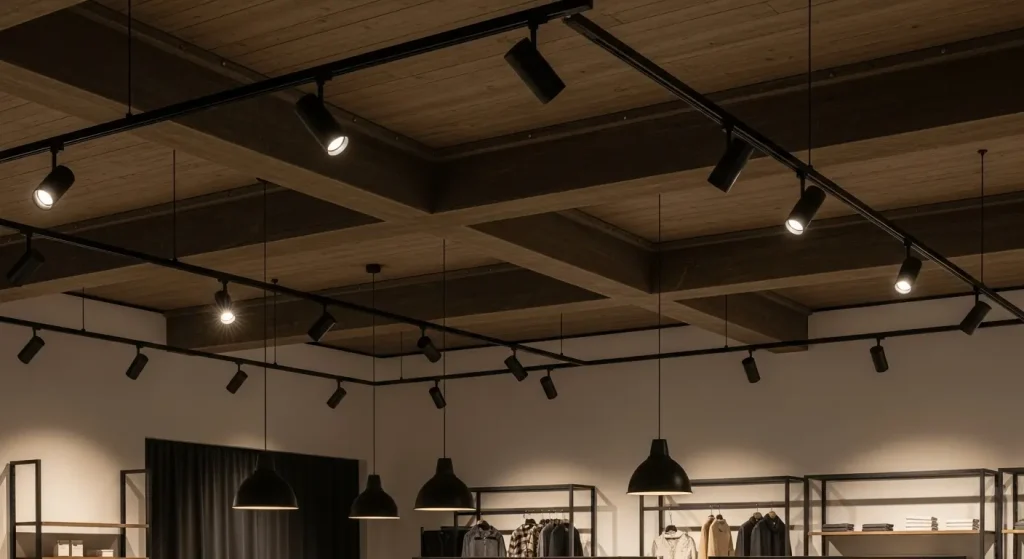
Unmatched Speed and Granularity for Dynamic Effects
DMX is fast. Really fast. It updates all 512 channels many times per second (typically around 40-44Hz). This speed, combined with 256 steps of control per channel, allows for incredibly smooth fades, rapid color changes, and perfectly synchronized dynamic lighting effects that other protocols simply can’t match. If you want your track lighting to pulse with music, create flowing color washes, or execute intricate light shows, DMX is your go-to.
The King of Color: RGB, RGBW, and Tunable White Mastery
This is where DMX dimmable track lighting truly shines. Because each color element (Red, Green, Blue, White, Amber, Warm White, Cool White, etc.) can be assigned its own DMX channel, you have incredibly precise control over color mixing and intensity.
- Want the perfect shade of sunset orange? DMX can deliver.
- Need to transition seamlessly from a cool, energizing daylight white to a warm, inviting evening white? DMX handles tunable white with finesse.
- Looking to create vibrant, saturated color scenes or subtle pastel washes on a retail display? DMX gives you the palette and the control.
“DMX controlled RGBW track lights” are a staple in high-impact designs.
Scalability for Complex Installations
While one DMX universe has 512 channels, complex projects can easily use multiple universes. Modern DMX controllers and software can manage many universes, allowing you to control thousands of channels for large-scale architectural installations, expansive retail floors, or elaborate museum exhibits. DMX over IP protocols like Art-Net or sACN further enhance this scalability by allowing DMX data to be sent over standard Ethernet networks.
Reliability in Demanding Environments
DMX was forged in the tough environment of live touring and theatre productions, where reliability is non-negotiable. The protocol itself and the associated hardware (when properly specified and installed) are designed to be robust and dependable, even when controlling a multitude of fixtures running complex sequences for extended periods.
The Other Side of the Coin: Practical Realities of DMX Track Lighting
As powerful as DMX is, it’s not without its complexities and considerations. It’s important to go in with your eyes open.
Complexity in Setup and Programming
Unlike a simple dimmer switch, DMX systems require careful planning, addressing of fixtures, and programming of lighting scenes or shows.
- Addressing: Each fixture needs its DMX start address set correctly (via DIP switches, rotary dials, or digitally with RDM). An error here can lead to fixtures not responding or behaving erratically.
- Programming: Creating dynamic scenes, chases, and color effects usually requires software or a console and some level of programming skill or hiring a specialist. It’s not typically “plug-and-play” for complex results.
Wiring Requirements: The DMX Cable Run
As mentioned, DMX needs its own dedicated, good-quality shielded twisted-pair cable, run in a daisy-chain configuration, and properly terminated. This is more involved than standard mains wiring for a TRIAC dimmer or the simpler 2-wire control for 0-10V. In retrofits, running DMX cabling can be a significant undertaking.
Cost Considerations: Beyond the Fixture Itself
While the cost of DMX-compatible LED track fixtures has come down, a full DMX system involves more than just the lights:
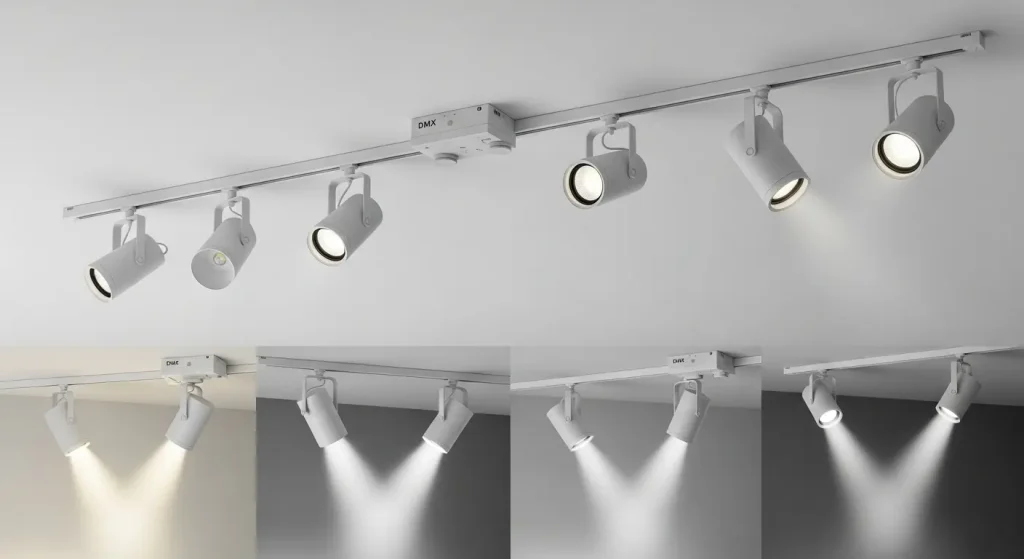
- DMX Controllers: Can range from a few hundred dollars for basic models to many thousands for professional consoles or advanced software/hardware packages.
- DMX Decoders/Drivers: If not built into the track head, these add cost.
- Specialized Cabling and Connectors.
- DMX Splitters/Boosters if needed.
- Programming and Commissioning Time: This can be a significant cost factor, especially for complex shows. Don’t underestimate it.
Is It Overkill for Simple Dimming?
Absolutely. If all you need is to dim a run of white track lights up and down smoothly, DMX is like using a sledgehammer to crack a nut. Simpler, more cost-effective solutions like 0-10V, good quality phase-cut (ELV), or even basic DALI would be more appropriate. DMX truly comes into its own when dynamic control, color, or high-speed effects are the primary goal.
DMX vs. The Architectural Lighting Titans: Where Does It Fit?
Understanding DMX unique strengths becomes clearer when you compare it to other common professional lighting control protocols.
DMX vs. DALI: Speed and Showmanship vs. Addressable Management
- DMX: Optimized for fast, real-time dynamic effects, color changes, and “show” lighting. Traditionally unidirectional (though RDM adds some bi-directional capability).
- DALI: Designed for architectural building lighting management. Offers individual and group addressing, bi-directional communication for status feedback (lamp life, energy use), fault reporting, and robust scene control for functional and ambient lighting. It’s generally slower than DMX, making it less ideal for rapid, entertainment-style effects.
- Verdict: For dynamic, colorful shows on track lighting, DMX wins. For overall building lighting control with feedback and energy management features where track lighting is part of a larger system, DALI is often preferred. Hybrid systems using DMX-to-DALI gateways exist for bridging these worlds.
DMX vs. 0-10V: Dynamic Digital vs. Simple Analog
- DMX: Digital, addressable (per channel, effectively per parameter), capable of complex color and intensity control.
- 0-10V: Analog, zonal control for intensity only. Simple, reliable for basic dimming.
- Verdict: No contest for dynamic or color control – DMX is far superior. For straightforward zonal dimming of white light, 0-10V is simpler and more cost-effective.
DMX vs. Consumer Smart Lighting: Professional Powerhouse vs. User-Friendly Convenience
- DMX: Professional-grade, highly reliable, capable of intricate and large-scale control, but requires technical setup and programming.
- Consumer Smart Lighting (Wi-Fi, Zigbee, Matter, etc.): User-friendly apps, voice control, easy scene setup for homes or small businesses. Good for basic color changes and dimming. Generally not as robust, scalable, or fast as DMX for professional dynamic effects.
- Verdict: For ease of use and basic smart features in a residential or light commercial track setting, consumer smart systems are great. For professional, high-impact, reliable dynamic lighting, DMX is the industry standard.
Quick Look Table: DMX in the Dimming Spectrum
| ميزة | DMX Dimmable Track Lighting | DALI Track Lighting | 0-10V Track Lighting | Smart/Wireless Track Lighting |
|---|---|---|---|---|
| Primary Use | Dynamic effects, color, shows | Architectural management | Commercial zonal dim | Smart home, convenience |
| Control Type | Digital, Channel-based | Digital, Addressable | Analog, Zonal | Digital, App/Voice (often) |
| Speed | Very Fast | معتدل | N/A (Intensity only) | Varies, generally slower |
| Color Control | Excellent (RGB, RGBW, TW) | Good (DT8 for color/TW) | No (Intensity only) | Good (RGB, TW often) |
| Feedback | Limited (RDM adds some) | Yes (Extensive) | لا | Often Yes |
| Complexity | High (Programming/Setup) | Moderate-High (Commissioning) | Low-Moderate (Wiring) | Low-Moderate (Setup) |
| Cost (System) | عالي | عالي | Low-Moderate | Moderate-High |
Prime Applications for DMX Dimmable Track Lighting in 2025
So, where would you typically see DMX dimmable track lighting making a real impact? It’s all about creating experiences and highlighting features dynamically.
- High-Impact Retail Displays and Experiential Stores: Think flagship stores where lighting transforms to match product launches, seasons, or create an immersive brand experience. “DMX track lighting for retail” can create captivating, attention-grabbing effects.
- Museums and Galleries for Dramatic Exhibit Lighting: DMX allows for precise control to highlight artifacts dramatically, create subtle shifts in mood, or even synchronize lighting with multimedia presentations.
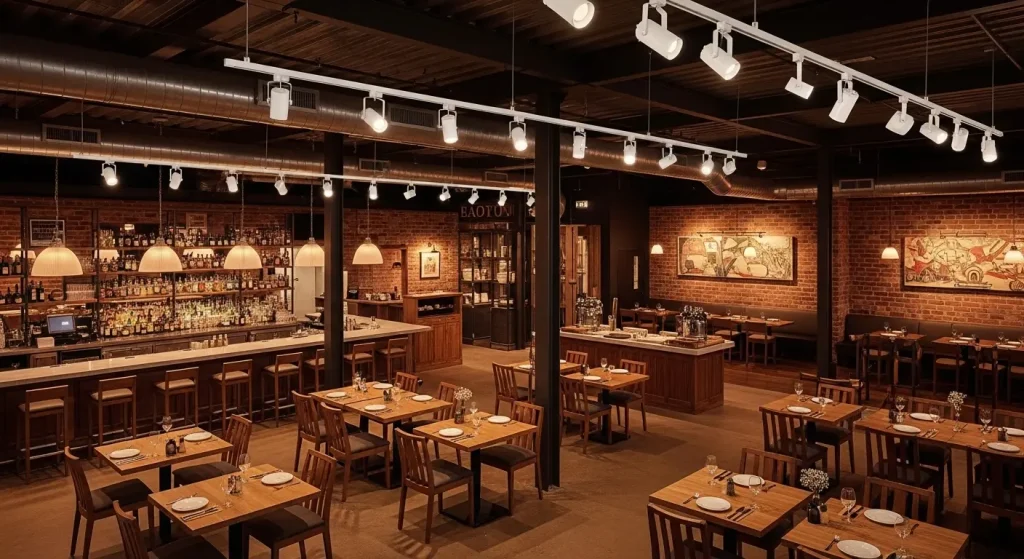
- Hospitality (Hotels, Bars, Restaurants) for Creating Unforgettable Ambiance: Imagine a hotel lobby where the track lighting subtly changes color throughout the day, or a bar where it pulses gently to the music. DMX can craft unique and memorable atmospheres that enhance the guest experience.
- Dynamic Architectural Features and Accent Lighting: Highlighting architectural details on columns, walls, or ceilings with track lights that can change color or intensity in programmed sequences.
- Themed Environments and Entertainment Venues: Smaller entertainment spaces, themed attractions, or even high-end home cinemas can leverage DMX track lighting for immersive effects.
Navigating Your DMX Project: Tips for a Successful Implementation
If you’re considering DMX for your track lighting, a bit of planning and know-how goes a long way.
- The Importance of Proper Planning and Design: Define your goals clearly. What effects do you want to achieve? How many fixtures need independent control? This will determine the number of DMX channels and universes.
- Choosing the Right DMX Controller for Your Needs: Don’t overbuy or underbuy. For simple pre-programmed sequences, a basic standalone controller might suffice. For complex, evolving shows, software-based control or a more capable console will be necessary.
- Understanding DMX Addressing and Universe Management: Get comfortable with how DMX addresses are assigned and how to manage channels within one or more universes. Meticulous record-keeping is your friend!
- Don’t Forget RDM (Remote Device Management): If your fixtures and controller support RDM, it can be a lifesaver for remotely setting DMX addresses, changing modes, or diagnosing issues after installation, especially if fixtures are hard to reach.
- Working with Experienced DMX Programmers and Installers: For anything beyond very basic setups, partnering with professionals who understand DMX intricacies, proper wiring practices, and programming is highly recommended. Their expertise can save you a lot of time and headaches.
The Future of DMX in Architectural Illumination
Is DMX just an old stagehand trying to find new work, or does it have a bright future in architectural spaces?
- Market Trends: Continued Niche Dominance for Dynamic Control: While general lighting control trends lean towards smart and integrated building systems (often DALI or IP-based), DMX firmly holds its ground wherever high-speed, granular, dynamic color and intensity control are paramount. The market for DMX controllers and DMX-capable architectural fixtures continues to evolve.
- Integration with Other Protocols and Building Systems: We’re seeing more DMX-to-IP gateways (Art-Net, sACN) and DMX-to-DALI converters, allowing DMX to be a specialized “effects engine” within a larger, more integrated building control strategy.
- Advancements in DMX-Compatible LED Technology and Controllers: أضواء مسار LED are becoming more sophisticated with better DMX integration. Controllers are becoming more user-friendly (some with app interfaces) and more powerful.
- Expert Insights: Why DMX Remains Essential for Certain Visions: Lighting designers consistently turn to DMX when they need to create “wow” moments, tell stories with light, or achieve effects that demand its unique speed and precision. For these applications, it remains an indispensable tool.
Is DMX Dimmable Track Lighting Your Star Performer?
So, after all this, is DMX Dimmable Track Lighting the right choice for your track lighting needs in 2025?
DMX is likely your star performer if:
- أنت بحاجة dynamic, fast-paced lighting effects, intricate color changes (RGB/RGBW), or precise tunable white control.
- Your project involves creating an experiential environment (high-end retail, hospitality, museum, themed space).
- أنت بحاجة إلى scalability for a large number of individually controlled parameters.
- You have the budget and access to expertise for proper design, installation, and programming.
DMX is probably not the best fit if:
- You only need simple on/off control or basic white light dimming for a zone of track lights.
- Your budget is very tight, and programming/setup costs are a major concern.
- You need extensive bi-directional feedback and building management integration (where DALI might be better).
- You prioritize extreme ease of use with minimal technical setup (where consumer smart lighting might appeal more for basic tasks).
DMX Dimmable Track Lighting is a true specialist. It’s a professional tool for creating extraordinary lighting experiences. When used in the right context and implemented with skill, it can elevate a space from mundane to magical. If your vision calls for lighting that does more than just illuminate – lighting that performs – then DMX is undoubtedly ready to take center stage on your tracks.
Ready to explore the dynamic possibilities of DMX for your next project? Consulting with a lighting designer or integrator experienced in DMX will be invaluable in bringing your vision to life.