 XHLUX
XHLUX
![كيفية اختيار الإضاءة السفلية: الدليل النهائي المكون من 5 خطوات [2025]](https://xhlux.com/wp-content/uploads/2024/05/news.webp)
جدول المحتويات
- Before You Begin: The Three Foundational Questions
- A 5-Step Framework for Choosing the Perfect Downlight
- Putting It All Together: A Room-by-Room Downlight Cheat Sheet
- The Future of Downlighting: Smart, Human-Centric, and Integrated
- FAQ About How to Choose Downlight
- The Final Verdict: The Power of a Process
Choosing a downlight seems simple. It’s just a light in the ceiling, right? But get it wrong, and you’re left with a room that feels like a sterile operating theatre or a gloomy cave with awkward shadows. Get it right, however, and your space is transformed—it feels bigger, more inviting, and perfectly suited to your life.
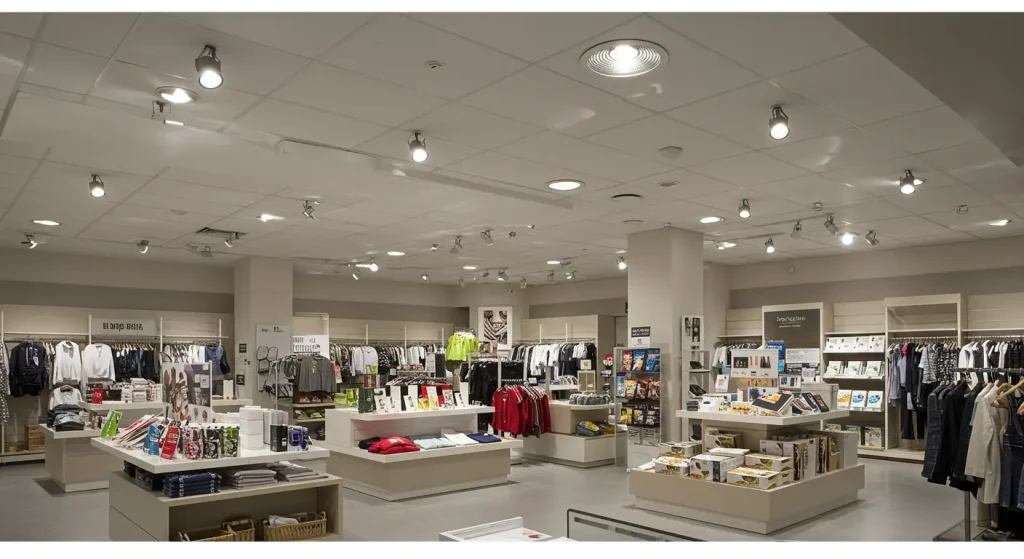
The good news? Choosing the perfect downlight isn’t about luck; it’s about following a process. The sheer volume of options—integrated, GU10, fixed, adjustable, warm, cool, narrow, wide—can be paralyzing. But it doesn’t have to be.
Before You Begin: The Three Foundational Questions
Before you even look at a single fixture, a great lighting plan starts with three high-level questions. Answering these first will narrow your options dramatically and set you on the right path.
1. What is the Primary Purpose of the Light?
First, define the job you need the light to do. In lighting design, we think in layers:
- Ambient Lighting: This is the foundational, general light that makes a room feel comfortable and safe to navigate. It’s the base layer. You’ll be looking for downlights with a wide, soft beam.
- Task Lighting: This is focused, brighter light for specific activities like chopping vegetables in the kitchen, reading in a chair, or applying makeup in the bathroom. You’ll need a downlight with a more controlled, medium beam.
- Accent Lighting: This is the “drama” layer. It’s used to highlight artwork, architectural features like a fireplace, or textured walls. You’ll need an adjustable downlight with a narrow beam.
2. What is the Space?
The room itself dictates many of your choices. A downlight that’s perfect for a kitchen might be all wrong for a living room. Consider the room’s function (e.g., work vs. relaxation) and any special conditions (e.g., moisture in a bathroom).
3. What is Your Ceiling Like?
Look up. The nature of your ceiling is a critical factor.
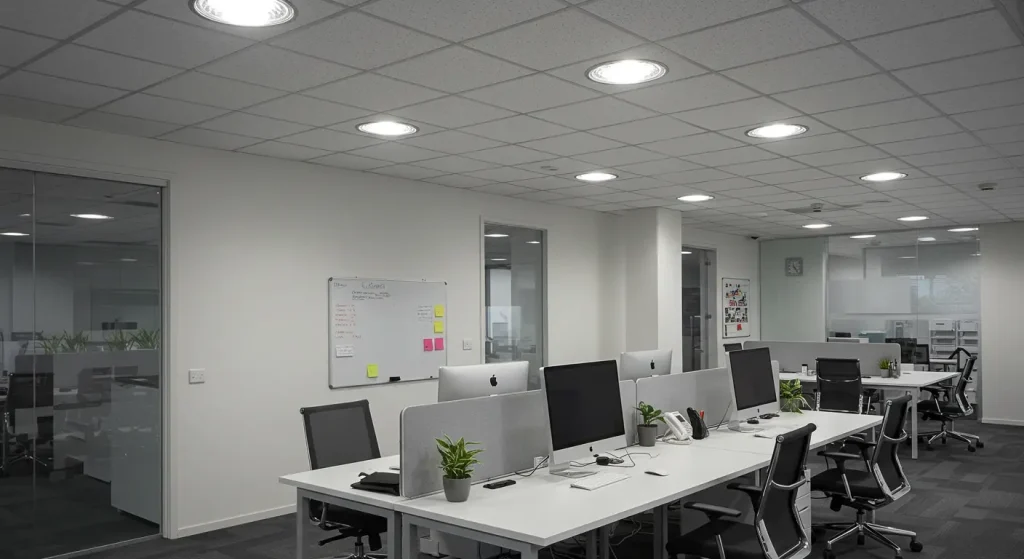
- Height: A standard 8-foot ceiling requires a different beam angle and spacing than a 12-foot vaulted ceiling.
- Slope: Is the ceiling sloped? If so, you’ll need specialized downlights designed for angled installation or adjustable “gimbal” fixtures.
- Insulation: Is there insulation in the ceiling cavity? This will determine whether you need an “IC-rated” downlight (a crucial safety feature).
A 5-Step Framework for Choosing the Perfect Downlight
With the foundational questions answered, you’re ready to dive into the specifics. Follow this five-step process to build your perfect downlight specification.
Step 1: Choose Your System Type (Flexibility vs. Simplicity)
This is the single biggest decision you’ll make upfront. It determines how your downlights will be installed and maintained for years to come.
| System Type | How It Works | Pros | Cons |
|---|---|---|---|
| Integrated LED Downlight | An all-in-one unit where the light source (LED chip) and fixture are permanently combined. | Simple to specify; highly efficient; can have a very slim profile. | No flexibility. If the LED fails, the entire fixture must be replaced by an electrician. Not upgradeable. |
| Replaceable Bulb System (e.g., GU10) | A two-part system with a downlight housing and a separate, interchangeable bulb (like a GU10 LED). | Ultimate flexibility. Bulbs can be easily replaced or upgraded to change beam angle, color, or features. User-serviceable. | Fixture performance is dependent on the quality of the bulb you choose. |
Our Insight: For most homeowners, we strongly recommend a replaceable bulb system like GU10. The long-term flexibility to easily upgrade your technology or change your lighting style without an electrician provides immense value and peace of mind. Integrated LEDs are excellent but best suited for commercial projects with dedicated maintenance staff.
Step 2: Define the Fixture’s Function (Fixed vs. Adjustable)
Next, decide if you need the light to point straight down or if you need to aim it.
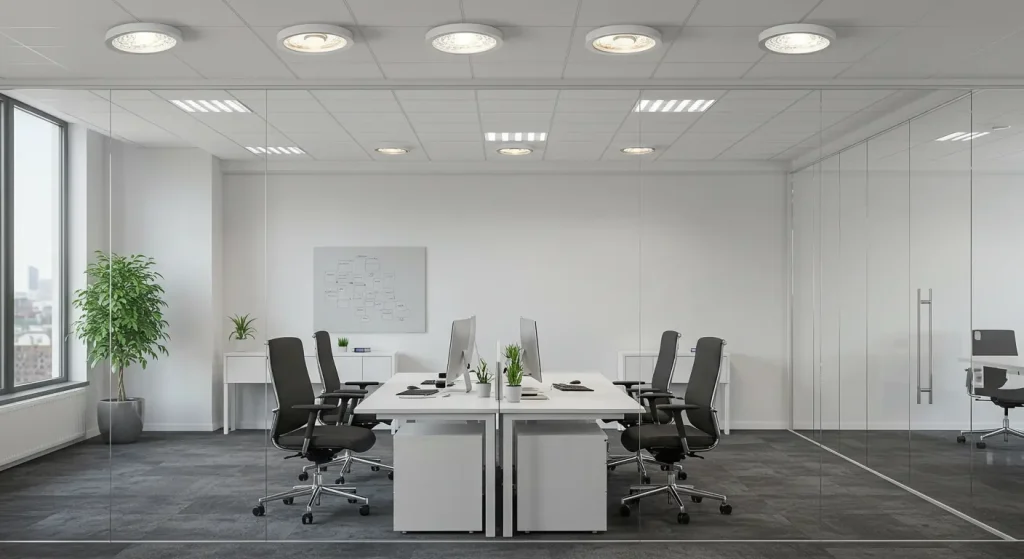
- Fixed Downlights: These point straight down and are perfect for creating the ambient layer of light. They provide even, general illumination for open spaces, hallways, and overall room brightness.
- Adjustable Downlights (Gimbal or Eyeball): These fixtures can be tilted and rotated within their housing. They are your essential tool for accent and task lighting. Use them to aim light precisely at artwork, wash a wall with light, or provide focused light over a countertop.
Step 3: Sculpt the Light (Beam Angle & Spacing)
The beam angle determines the size and shape of the cone of light. This is how you control the effect of your lighting.
- Narrow Beam (10°-25°): Creates a sharp, high-contrast pool of light. Perfect for إضاءة مميزة on smaller objects from a distance.
- Medium Beam (25°-40°): The most versatile “all-rounder.” Excellent for task lighting and for general illumination from standard ceiling heights.
- Wide Beam (40°+): Creates a soft, broad wash of light with feathered edges. Ideal for the ambient layer from lower ceilings to ensure even, overlapping coverage.
A simple rule of thumb for spacing: divide your ceiling height by two. For a standard 8-foot ceiling, spacing your general ambient downlights about 4 feet apart is a good starting point. Use tighter spacing for task areas and wider spacing for circulation zones.
Step 4: Master the Mood (Color & Control)
This step is all about the quality and feel of the light itself.
- Color Temperature (CCT): This is the “warmth” or “coolness” of the white light, measured in Kelvin (K).
- 2700K (Warm White): A cozy, intimate glow like an incandescent bulb. Perfect for bedrooms and relaxing living room areas.
- 3000K (Soft White): A clean, inviting white. The most popular choice for kitchens, bathrooms, and all-around home use.
- 4000K (Cool White): A neutral, bright white. Better for garages, home offices, and high-energy work areas.
- Color Rendering Index (CRI): This is a measure of light quality. For any home, demand a CRI of 90 or higher. This ensures that skin tones, food, and your interior decor colors look natural and vibrant. A low CRI (in the 80s) will make everything look slightly dull.
- Dimming: Dimming is non-negotiable for any modern lighting plan. It’s the key to creating atmosphere. For the ultimate cozy feel, look for “Warm Dim” technology, which makes the light grow warmer in color as it dims, mimicking a sunset or a candle’s flame.
Step 5: Ensure Safety & Compliance (The Technical Checks)
Finally, a few critical safety checks can’t be overlooked.
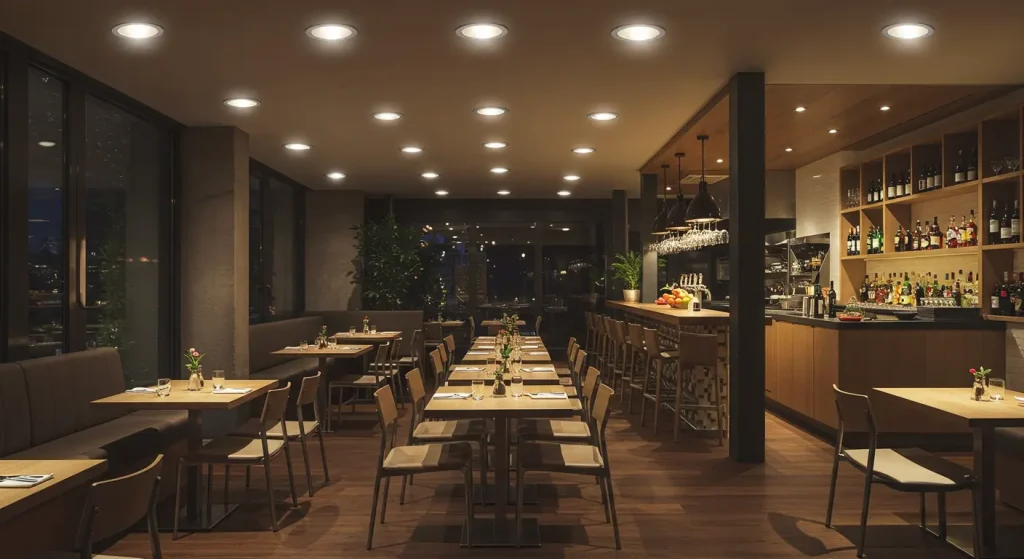
- Fire Rating: If your downlights are being installed in a ceiling with a habitable room above it, building codes often require fire-rated fixtures. These are designed to seal the ceiling in case of a fire, preventing its spread.
- IC Rating (Insulation Contact): If your ceiling has insulation, you must use IC-rated downlights. These are certified to be in direct contact with insulation without overheating. Using a non-IC rated fixture in contact with insulation is a serious fire hazard.
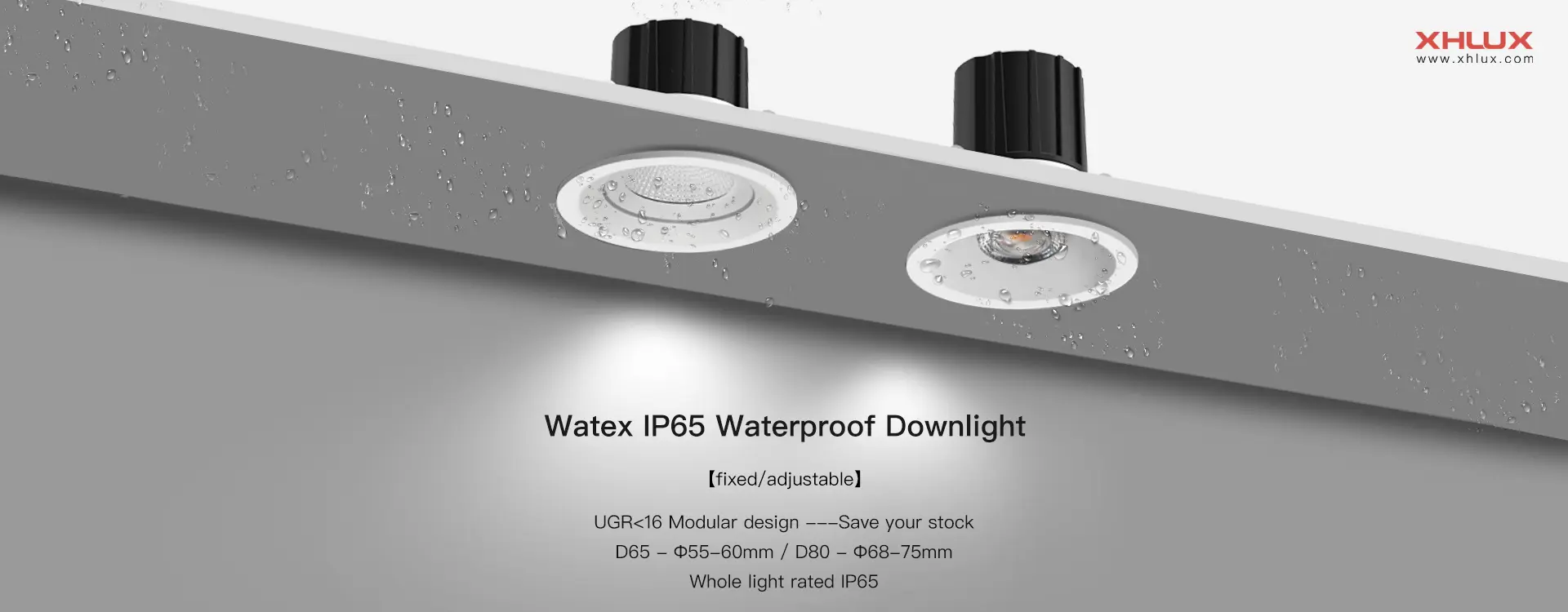
- IP Rating (Ingress Protection): For bathrooms, especially in zones close to a shower or bath, you need downlights with a suitable IP rating (e.g., IP44 or higher) that protects against moisture and water splashes.
Putting It All Together: A Room-by-Room Downlight Cheat Sheet
| Room | Recommended System | Primary Beam Angle | CCT الموصى به | Key Features to Look For |
|---|---|---|---|---|
| Kitchen | GU10 Replaceable Bulb | Medium (30°-40°) | 3000K – 4000K | High CRI (90+), Dimmable, Task-focused placement over counters. |
| Living Room | GU10 Replaceable Bulb | Wide (40°+) for Ambient, Narrow (15°-25°) for Accents | 2700K – 3000K | Excellent Dimming, Warm Dim, High CRI, Adjustable fixtures for artwork. |
| Bathroom | GU10 or Integrated | Medium (30°-40°) | 3000 ألف | IP44+ Rating, High CRI for accurate skin tones, Dimmable. |
| Bedroom | GU10 Replaceable Bulb | Wide (40°+) | 2700 ألف | Excellent Dimming, Warm Dim, place lights away from directly over the bed. |
| Hallway | Fixed Downlight | Wide (60°+) | 3000 ألف | Wall washing placement to make the space feel wider. |
The Future of Downlighting: Smart, Human-Centric, and Integrated
The humble downlight continues to evolve. The market is moving towards solutions that are not just efficient, but actively contribute to our well-being. This includes a major focus on “human-centric lighting”—systems with tunable white technology that can change color temperature throughout the day to support our natural circadian rhythms. The integration of smart controls (like Zigbee or Casambi) directly into bulbs and fixtures is also becoming standard, making sophisticated, layered lighting accessible to everyone.
FAQ About How to Choose Downlight
The Final Verdict: The Power of a Process
There is no single “best” downlight. There is only the best downlight for your room, your ceiling, your application, and your life. By abandoning the search for a magic product and instead adopting a methodical, step-by-step selection process, you guarantee a better outcome.
By working through the 5-step framework—System Type, Function, Beam Angle, Color & Control, and Safety—you move from a place of confusion to one of clarity and confidence. You stop buying a light fixture and start designing a lighting experience.
Ready to create a lighting plan that transforms your home?
Applying this framework is the first step. If you need help selecting the specific products that fit your plan or want an expert eye on your layout, our team of residential lighting specialists is here to assist.
Contact us today for a professional consultation, and let’s design a perfectly lit space together.