 XHLUX
XHLUX
![دليل شراء مصابيح المسار القابلة للتعتيم [2025]](https://xhlux.com/wp-content/uploads/2024/05/news.webp)
جدول المحتويات
- The Core Question: What Makes a Track Spotlight “Dimmable”?
- Decoding Your Dimming Options: A Guide to Control Protocols
- 1. Phase-Cut Dimmers (TRIAC & ELV): The Common Choice
- 2. 0-10V Dimming: The Smooth Commercial Standard
- 3. Digital Addressable (DALI): The Professional’s Choice for Individual Control
- 4. On-Board Smart Controls (Zigbee, Wi-Fi, etc.): The Convenient Wireless Option
- Quick Comparison: Choosing Your Dimming Path
- Beyond Dimming: Key Features to Look for in a Quality Dimmable Track Spotlight
- Compatibility Check: Will This Spotlight Fit My Track?
- Where to Use Dimmable Track Spotlights: Top Applications for Maximum Impact
- Market Insights & The Future of Accent Lighting
- The Final Verdict: Choosing the Perfect Dimmable Track Spotlight
The spotlight is the hero of focused light. It draws our eyes to art, illuminates our kitchen tasks, and creates pockets of drama and intimacy in a room. But a spotlight that can’t dim is like a sports car stuck in first gear—you’re missing out on its full potential. The ability to adjust its intensity is what transforms a simple Dimmable Track Spotlight from a functional fixture into a dynamic design tool.
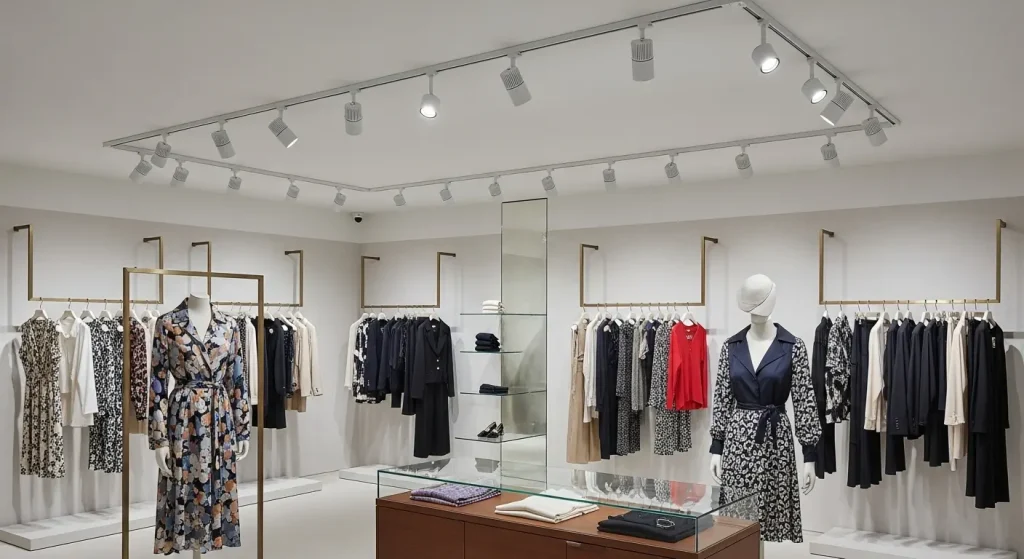
But here’s where many people get stuck. You’ve picked your track, but now you’re faced with a world of choices for the spotlights themselves. What does “dimmable” even mean in this context? Will it work with your existing switch? What’s the difference between TRIAC, 0-10V, and DALI? And what other features should you even be looking for?
The Core Question: What Makes a Track Spotlight “Dimmable”?
First things first. It isn’t the track or the LED itself that determines the dimming method. The secret is hidden inside the base of the spotlight, in a critical component called the LED driver.
Think of the LED driver as the spotlight’s brain and digestive system combined. It takes the power from the track (whether it’s high-voltage AC or low-voltage DC), converts it into the specific power the LED needs to light up, and—most importantly—interprets the dimming signal to adjust the brightness.
Therefore, when you choose a Dimmable Track Spotlight, you are primarily choosing a fixture with a specific type of dimmable LED driver inside. The type of driver dictates which control system it can talk to.
Decoding Your Dimming Options: A Guide to Control Protocols
This is the most crucial decision you’ll make. Choosing the wrong type of dimming will lead to flickering, buzzing, or a system that simply doesn’t work. Let’s break down the main “languages” these drivers speak.
1. Phase-Cut Dimmers (TRIAC & ELV): The Common Choice
This is the most common method for residential applications because it works with standard 2-wire mains wiring. The dimmer “chops” the AC power wave.
- TRIAC (Leading-Edge): The older, more traditional type. It can be problematic with low-power LEDs unless the spotlight’s driver is specifically designed to handle it.
- ELV (Trailing-Edge): A more modern and sophisticated type of phase-cut dimming. It’s generally much better for LEDs, offering smoother dimming and less noise.
- The Bottom Line: If your track is wired to a standard wall dimmer, you need a TRIAC dimmable spotlight (or one compatible with ELV). Compatibility is everything. Always check the dimmer manufacturer’s list of approved LED fixtures, and vice-versa.
2. 0-10V Dimming: The Smooth Commercial Standard
This method uses a separate pair of low-voltage wires to send a simple analog signal (0 to 10 volts) from the dimmer to the driver.
- How it Works: The driver in the spotlight receives this signal and dims smoothly and precisely in response. 10V is full brightness; 0V is the minimum level.
- The Bottom Line: You need spotlights with 0-10V dimmable drivers and the appropriate low-voltage wiring running to your track. It provides excellent performance but is more common in commercial settings or new builds due to the wiring requirement.
3. Digital Addressable (DALI): The Professional’s Choice for Individual Control
DALI is a digital protocol that also uses a separate two-wire data bus. It’s the powerhouse of professional lighting control.
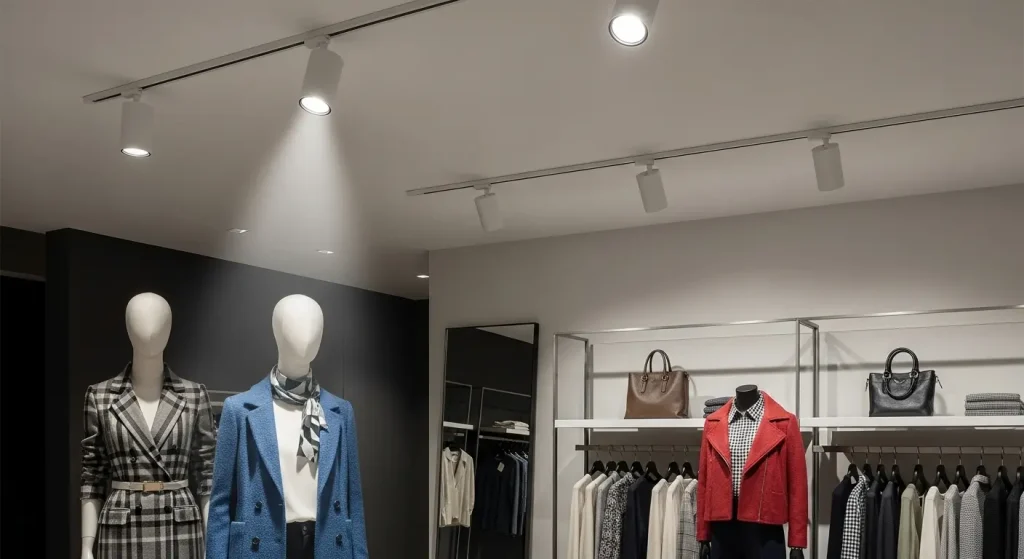
- How it Works: Each DALI controlled track spotlight has a unique digital address. You can send commands to each spotlight individually or group them digitally, all from a central controller.
- The Bottom Line: This offers the ultimate in control and flexibility, allowing you to reconfigure lighting scenes without touching a single wire. It’s a premium option found in galleries, high-end retail, and sophisticated smart buildings.
4. On-Board Smart Controls (Zigbee, Wi-Fi, etc.): The Convenient Wireless Option
These spotlights have a wireless receiver built directly into the fixture’s driver. The track provides constant power, and the control is handled wirelessly.
- How it Works: A Zigbee smart track spotlight, for example, pairs with a Zigbee hub. You can then use an app, voice commands, or smart remotes to control each spotlight’s brightness, color, and grouping.
- The Bottom Line: This is a fantastic option for adding granular, smart control without complex wiring. It’s perfect for smart homes and tech-forward small businesses.
Quick Comparison: Choosing Your Dimming Path
| Dimming Method | Typical Wiring | Control Type | الأفضل لـ | Key Advantage | Major Downside |
|---|---|---|---|---|---|
| Phase-Cut (TRIAC/ELV) | 2-wire Mains | Zonal | Residential, Retrofits | Simple wiring | LED Compatibility Issues |
| 0-10V | Mains + 2 LV wires | Zonal | Commercial, New Builds | Smooth, reliable dimming | Requires extra wiring |
| دالي | Mains + 2 data wires | Individual Addressable | High-End Commercial, Galleries | Ultimate control & feedback | Complex & costly |
| On-Board Smart | Constant Mains Power | Individual Wireless | Smart Homes, Tech-forward spaces | Convenience & flexibility | Hub dependency (often) |
Beyond Dimming: Key Features to Look for in a Quality Dimmable Track Spotlight
Choosing a dimming protocol is step one. To select a truly great spotlight, you need to consider the quality of the light itself. Here are the features the pros always check.
Beam Angle: Shaping the Light
The beam angle determines the width of the cone of light produced by the spotlight. It’s measured in degrees.
- Narrow Beams (10°- 25°): Create dramatic, high-contrast accent lighting. Perfect for highlighting small objects, sculptures, or creating focused “pools” of light on a table. This is your classic “spotlight” effect.
- Medium Beams (25°- 40°): A versatile choice for general accent lighting, illuminating larger artwork, or providing focused light on kitchen counters or workspaces.
- Wide Beams (40°+): Function more like floodlights. Good for washing walls with light, general ambient illumination, or lighting larger areas.
- نصيحة احترافية: Some high-end adjustable beam angle track spotlights allow you to change the beam angle manually, offering incredible flexibility from a single fixture.
Color Rendering Index (CRI): Seeing True Colors
CRI is a score from 0 to 100 that measures how accurately a light source reveals the true colors of objects compared to natural sunlight.

- CRI 80+: Considered the minimum for general residential use. It’s “good enough” for most spaces.
- CRI 90+: This is the professional standard. Colors will appear richer, more vibrant, and more accurate. Skin tones look natural. Food looks appetizing.
- CRI 95+: Essential for applications where color accuracy is critical, such as art galleries, high-end retail boutiques (fashion, cosmetics), and photography studios. A high CRI track spotlight for art is non-negotiable for any serious collector or gallery.
Correlated Color Temperature (CCT): Setting the Mood
CCT describes the color appearance of the white light, measured in Kelvin (K).
- Warm White (2700K – 3000K): Creates a cozy, inviting, and relaxing atmosphere, similar to traditional incandescent bulbs. Perfect for living rooms, bedrooms, and fine dining restaurants.
- Neutral White (3500K – 4000K): A clean, crisp, and vibrant light that’s great for kitchens, offices, workspaces, and modern retail environments.
- Cool White (5000K+): A bright, bluish-white light similar to daylight. Best for task-intensive environments like workshops, hospitals, or commercial applications where high alertness is needed.
- Tunable White: Some advanced spotlights allow you to adjust the CCT, giving you the ability to change the mood of your space dynamically.
Lumen Output: How Bright Is Bright Enough?
Lumens (lm) measure the total amount of visible light emitted by a source. More lumens mean a brighter light. The required lumen output for your dimmable LED track spotlight depends on your ceiling height and application:
- Accent Lighting: Typically requires lower lumens (e.g., 500-800 lm) to create contrast.
- Task Lighting: Requires higher lumens (e.g., 800-1500+ lm) for good visibility.
- General Illumination: Depends on the size of the room and number of fixtures.
Remember, the beauty of a dimmable spotlight is that you can choose a fixture with ample lumen output and then dim it down to the perfect level. It’s always better to have more brightness available than not enough.
Adjustability & Optics: Swivel, Tilt, and Lens Quality
A good track spotlight should be highly adjustable, typically offering a 350°+ rotation and a 90° tilt. This allows you to aim the light precisely where you need it. Also, pay attention to the quality of the lens or reflector, which shapes the beam and minimizes glare.
Compatibility Check: Will This Spotlight Fit My Track?
This is a critical, practical step that often trips people up. A spotlight has two levels of compatibility you must verify:
- Electrical Compatibility: Does the spotlight’s dimming protocol (TRIAC, 0-10V, دالي, etc.) match your control system? We’ve covered this in detail above.
- Physical Compatibility: Will the spotlight’s adapter physically connect to your track? There are several common standards in North America:
- H-Type (Halo): 3 contacts, 1″ on-center spacing.
- J-Type (Juno): 2 contacts, 15/16″ on-center spacing.
- L-Type (Lightolier): 2 contacts, 7/8″ on-center spacing.
You cannot mix and match these. An H-type spotlight will not fit on a J-type track. Additionally, there are 3-circuit و 48V Magnetic track systems that have their own proprietary or standardized connection types. Always buy spotlights that are explicitly stated as compatible with your specific track system.
Where to Use Dimmable Track Spotlights: Top Applications for Maximum Impact
The power of a high-quality Dimmable Track Spotlight is its ability to create focus and drama. Here’s where they truly excel:
- Living Rooms: Creating accent lighting on artwork, architectural features like a fireplace or textured wall, or providing focused reading light next to a chair.
- المطابخ: Indispensable for task lighting over countertops and kitchen islands. A row of dimmable spots ensures you have bright light for food prep, which can then be dimmed down for a more relaxed dining atmosphere.
- Art Galleries and Homes with Collections: The absolute best way to light art. You can precisely aim high-CRI spotlights, control their intensity for conservation, and create a gallery-quality experience.
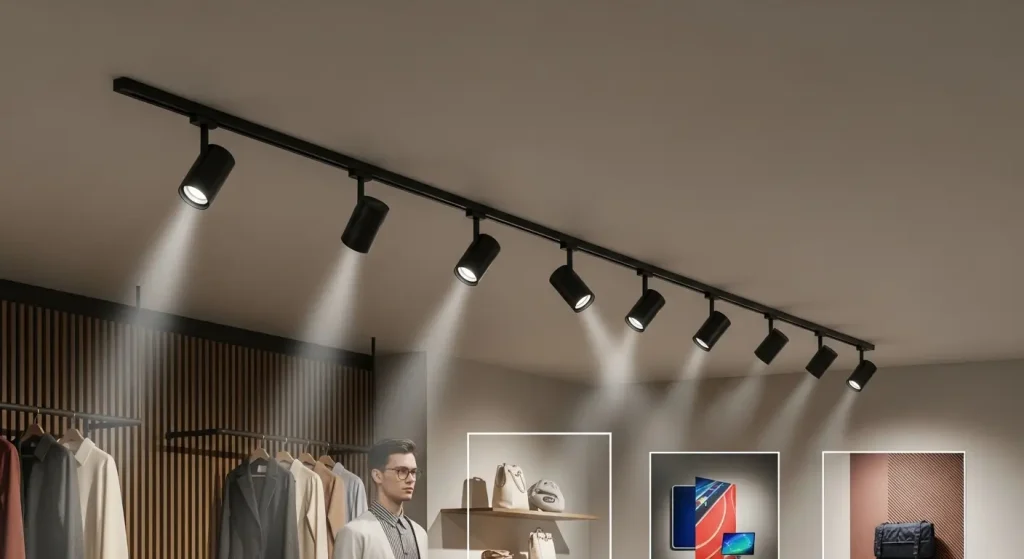
- Retail Displays: Guiding the customer’s eye, making merchandise pop, and creating an engaging shopping environment.
- Home Offices: Providing flexible, glare-free task lighting over a desk that can be adjusted as needed.
Market Insights & The Future of Accent Lighting
The demand for high-quality, flexible lighting is growing. Market research from firms like Technavio and Allied Market Research consistently shows the global LED lighting market expanding, with a significant sub-segment being smart and controllable lighting. The trend for 2025 and beyond is clearly towards more human-centric lighting—systems that are not only efficient but also highly controllable and adaptable to user needs and activities. The Dimmable Track Spotlight is at the heart of this trend, moving from a simple utility fixture to a key component of sophisticated, personalized lighting design.
The Final Verdict: Choosing the Perfect Dimmable Track Spotlight
Selecting the right Dimmable Track Spotlight is about more than just its looks. It’s a process of matching the right technology to your space and needs.
Your checklist for choosing the perfect spotlight:
- Dimming Protocol: First, confirm the control system you will use (Phase-Cut, 0-10V, DALI, Smart Wireless) and choose a spotlight with a compatible driver.
- Physical Track Compatibility: Double-check that the spotlight’s adapter matches your track type (e.g., H, J, L, 3-Circuit, 48V Magnetic).
- Light Quality:
- زاوية الشعاع: Choose narrow for drama, wide for wash.
- CRI: Aim for 90+ for accurate colors.
- CCT: Select the color temperature that creates the right mood.
- Brightness & Adjustability: Ensure it has enough lumen output for your needs and offers good physical rotation and tilt.
By carefully considering these factors, you move from a position of uncertainty to one of control. You’ll be able to select a spotlight that not only illuminates your space but enhances it, offering the perfect blend of performance, quality, and dynamic control for years to come.
If you’re ready to bring focused, flexible, and beautifully controlled light into your project, start by exploring spotlights that meet these key criteria. A quality dimmable spotlight is an investment that pays off every time you adjust the light to create that perfect moment.