 XHLUX
XHLUX

جدول المحتويات
- 1. What Makes a Commercial Lighting System Suitable for Hotels?
- 2. Types of Commercial Lighting Used in Hotels
- 3. Lighting Requirements for Each Hotel Area
- 4. Key Technical Specifications for Hospitality Lighting
- 5. How to Design a Hotel Lighting Plan (Step-by-Step)
- 6. Common Mistakes in Hotel Lighting (and How to Avoid Them)
- 7. FAQ About Commercial Lighting Systems
- خاتمة
- ✨ XHLUX Recommended Lighting for Hotels & Hospitality
In the hospitality industry, lighting is not merely a utility—it is the emotional engine behind the entire guest experience. Long before guests interact with staff, the first impression of a hotel is shaped by lighting: its warmth, uniformity, contrast, and character. From luxurious lobbies to intimate guestrooms and vibrant restaurants, a hotel’s lighting system influences brand perception, guest comfort, dwell time, and even revenue.
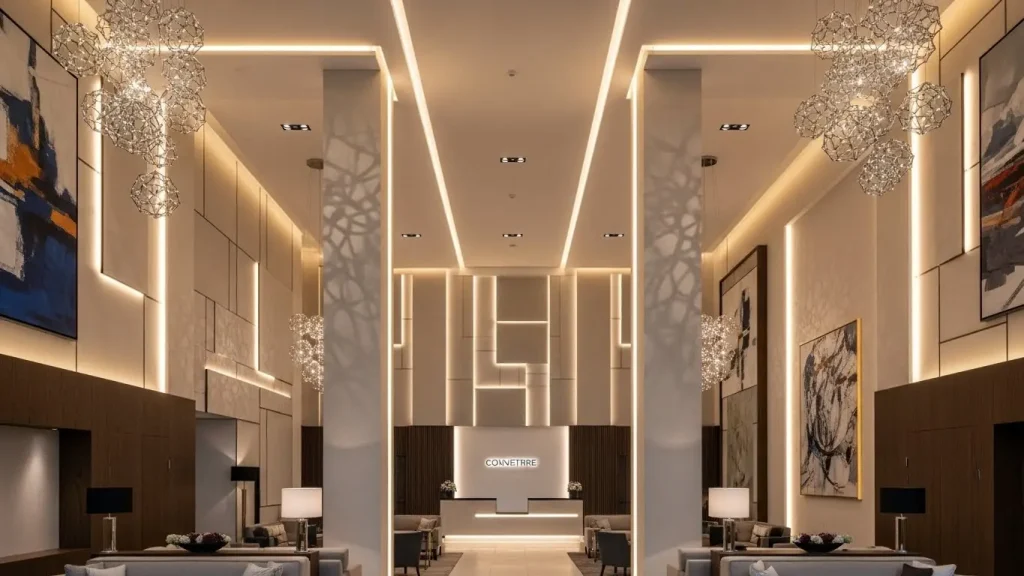
Modern commercial lighting systems combine architectural aesthetics with advanced LED technology, allowing hotels to create layered atmospheres while meeting strict energy, maintenance, and safety requirements. With LED linear systems, recessed downlights, track accents, and intelligent control networks, hospitality operators can reduce operating costs, simplify maintenance, and deliver a high-quality visual experience.
This guide explores every major category of hotel lighting, the best solutions for each area, technical specifications, design methods, and common mistakes to avoid. If you’re planning a new hospitality project or upgrading an existing property, this article provides a complete roadmap.
1. What Makes a Commercial Lighting System Suitable for Hotels?
Hotel lighting must balance aesthetics, comfort, function, safety, and efficiency. Unlike retail or office lighting, hospitality spaces revolve around emotional experience and brand story.
1. Visual Experience & Atmosphere
Hotels rely heavily on ambient warmth, visual comfort, and layered lighting to create welcoming environments. Guests should feel relaxed, oriented, and visually engaged.
2. Brand Identity
Lighting must reflect the hotel’s design language—modern minimalism, classical luxury, boutique coziness, or contemporary warmth.
Consistency in color temperature, fixture style, and distribution is essential.
3. Energy Efficiency (LED + Smart Control)
LED lighting significantly reduces electricity consumption, especially when combined with:
- التعتيم من 0 إلى 10 فولت
- DALI-2 smart systems (DALI Alliance)
- Occupancy sensors
- استغلال ضوء النهار
- Time-based scheduling
4. Durability & Low Maintenance
Hotels operate 24/7. Lighting downtime disrupts guests and increases complaints.
High-quality LED fixtures (L70 > 50,000 hours) minimize replacement and labor costs.
5. Advanced Lighting Control Systems
Hotels often require:
- Scene presets (Relax / Dining / Lobby Evening / Bar Night Mode)
- Dimming curves optimized for hospitality
- Integration with guest-room management systems
- Central building management compatibility
2. Types of Commercial Lighting Used in Hotels
Hotels rely on four primary lighting layers, plus essential safety lighting. Combining these layers creates depth, warmth, and functionality.
2.1 Ambient Lighting (General Illumination)
Ambient lighting provides the base level of illumination across large areas.
Common fixtures:
- LED linear lights
- لوحات إضاءة LED
- Ceiling-mounted commercial fixtures
سمات:
- Soft, uniform illumination
- Controlled glare (UGR < 19 for premium spaces)
- Typically warm white (2700–3000K)
2.2 Accent Lighting (Visual Highlights)
Accent lighting creates depth and elevates architectural features.
Common fixtures:
- LED spot downlights
- أضواء المسار
- عمال غسل الجدران
Used to highlight:
- Artwork
- Columns
- Textures
- Feature walls
- مكاتب الاستقبال
- Decorative surfaces
2.3 Task Lighting (Functional Illumination)
Focused lighting for specific activities.
Examples:
- Bedside reading lamps
- Desk lamps in guestrooms
- Kitchen and bar preparation areas
- Housekeeping zones
Recommended: CRI ≥ 90 for accurate rendering of food, finishes, textiles.
2.4 Decorative Lighting (Atmospheric & Stylistic)
Decorative fixtures reinforce brand identity:
- الثريات
- Pendants
- مصابيح جدارية
- Artistic fixtures
Used primarily in:
- Lobbies
- Lounges
- Restaurants
- Bars
- Suites
2.5 Emergency & Safety Lighting
Hotels must comply with safety standards such as IES, NFPA, and local code.
Includes:
- Emergency downlights
- Exit signs
- Backup corridor lighting
3. Lighting Requirements for Each Hotel Area
Below is a detailed breakdown of ideal lighting solutions for every major hospitality zone.
3.1 Lobby & Reception Area
The emotional heart of the hotel
Hotel lobbies define the brand’s first impression. Lighting must communicate hospitality, luxury, and clarity.
Recommended fixtures:
- Decorative pendants or chandeliers
- Recessed downlights (CRI ≥ 90)
- Wall washers for artwork
- Linear accents for architectural edges
→ https://xhlux.com/product-category/led-linear-light/
Lighting parameters:
- CCT: 2700K–3000K (warm & welcoming)
- CRI: 90+
- Layering: Ambient + accent + decorative
3.2 Guest Rooms
Comfort, privacy, relaxation
Guest rooms require intuitive, glare-free, and controllable lighting.
Required layers:
- Ambient (linear or ceiling fixtures)
- Task (bedside reading lamps)
- Accent (wall washers, decorative lamps)
- Bathroom lighting with high CRI for skin tone accuracy
Ideal parameters:
- CCT: 2700 كلفن - 3000 كلفن
- CRI: 90+
- Dimming: Mandatory, with multiple preset scenes
Smart control integration helps guests easily adjust lighting from bedside panels.
3.3 Hallways & Corridors
Navigation + Safety + Hospitality
Corridors are high-traffic zones requiring safe, uniform illumination.
Recommended fixtures:
- Linear wall or ceiling lights
- أضواء سفلية غائرة
- Motion/dimming night-mode lighting
Energy efficiency tip: Corridor occupancy sensors reduce nighttime energy use by up to 70%.
3.4 Restaurants, Cafés & Bars
Where lighting directly influences revenue
Hospitality F&B areas depend on atmosphere. Lighting influences:
- Appetite
- Comfort
- Perceived food quality
- Average spend
Recommended fixtures:
- Warm ambient lighting (2700K–3000K)
- Pendant lights over tables
- Accent spotlights for wine displays or artwork
- Wall washers for branding areas
To explore retail-grade spotlights (ideal for bars & dining)
Zoomable track lights enhance flexibility for seasonal menu changes
3.5 Conference Rooms & Business Centers
Functional, glare-controlled lighting is essential for presentations and meetings.
Recommended fixtures:
- لوحات إضاءة LED
- Suspended linear fixtures
- Dimmable systems (0–10V / DALI)
- Wall washers for projection walls
Proper uniformity prevents eye fatigue during long meetings.
3.6 Outdoor Hospitality & Landscape Lighting
Includes:
- Entry drive lighting
- Facade lighting
- Pathway lighting
- Poolside illumination
Fixtures must be waterproof, durable, and energy-efficient.
4. Key Technical Specifications for Hospitality Lighting
High-end hotel lighting requires more than good aesthetics—technical excellence is essential.
4.1 Color Temperature (CCT)
| Area | CCT الموصى به |
|---|---|
| Lobby | 2700–3000 كلفن |
| Guest rooms | 2700–3000 كلفن |
| Restaurants / bars | 2700–3000 كلفن |
| Corridors | 3000 ألف |
| Conference rooms | 3000–3500 كلفن |
| Outdoor | 3000–3500 كلفن |
Warm color temperatures align with hospitality’s emotional goals.
4.2 Color Rendering Index (CRI)
- مؤشر CRI ≥ 90 recommended for all premium hotels
- Higher CRI improves the appearance of décor, food, materials, and skin tones
4.3 Glare Control & UGR
Hospitality lighting should avoid harsh light sources.
- UGR < 19 recommended for reception, lobby, and guestrooms
- Deep reflector downlights help eliminate glare
4.4 Beam Angles
Beam selection controls atmosphere:
- Narrow (10°–24°) → artwork, bar displays, sculptures
- Medium (24°–36°) → accent walls
- Wide (40°–60°) → ambient lighting
- Asymmetric beams → corridor or wall washing
4.5 Dimming & Controls
Hospitality requires multiple scenes:
- Morning
- Afternoon
- Dinner
- Late evening mood
- Sleep
- Cleaning mode
Supported technologies:
- 0-10 فولت
- Triac/ELV
- DALI-2 (smart standard)
- Bluetooth / WiFi smart systems
4.6 Energy Efficiency & Long-Term ROI
Hotels operate long hours—LED upgrades yield:
- 50–80% energy savings
- Reduced HVAC load (less heat from lights)
- Maintenance cost reduction
For efficient linear lighting systems
5. How to Design a Hotel Lighting Plan (Step-by-Step)
A professional hospitality lighting plan typically follows these stages:
Step 1 — Space Analysis
Identify required lighting layers for each zone: lobby, guest rooms, F&B, conference areas, corridors, outdoor.
Step 2 — Define Light Levels & Color Strategy
Plan consistent:
- CCT
- CRI
- Brightness (lux levels)
Step 3 — Select Fixture Types
Choose:
- Linear fixtures for ambient
- Downlights for focus areas
- Track lights for accents
- Pendant or decorative fixtures for atmosphere
Step 4 — Layout Planning
Determine:
- Fixture spacing
- زوايا الشعاع
- Shadow and glare control
- Highlight points (artwork, signage, architecture)
Step 5 — Control System Integration
Create preset scenes for:
- Lobby late-night mode
- Restaurant Sunday brunch
- Guest room reading & relaxing
- Conference presentation mode
Step 6 — Energy Optimization
يستخدم:
- استغلال ضوء النهار
- Occupancy sensors
- Central BMS control
Step 7 — Installation & Commissioning
Ensure:
- Correct beam aiming
- Correct dimming curves
- Minimization of glare
- Smooth scene transitions
Step 8 — Maintenance & Lifecycle Planning
Hotels require:
- Long-life LEDs
- Easy replacement modules
- Firmware-upgradable smart drivers
6. Common Mistakes in Hotel Lighting (and How to Avoid Them)
❌ Mistake 1 — Inconsistent color temperature
Creates a chaotic, unprofessional look.
❌ Mistake 2 — Insufficient brightness
Causes spaces to appear old, dull, and low-value.
❌ Mistake 3 — No layered lighting
Flattened, uninviting atmosphere.
❌ Mistake 4 — Using cheap fixtures
Higher failure rate → increased guest complaints.
❌ Mistake 5 — No smart control
Cannot adjust atmosphere or reduce energy use.
❌ Mistake 6 — Poor glare control
Uncomfortable and visually stressful for guests.
7. FAQ About Commercial Lighting Systems
What type of lighting is best for hotels?
A combination of ambient, accent, task, and decorative lighting creates an inviting environment.
What CCT should hotels use?
2700–3000K is ideal for warm, welcoming hospitality environments.
Is LED good for hotels?
Yes—LED minimizes energy costs, reduces maintenance, and offers superior light quality.
How do I choose lighting for guest rooms?
Focus on warm CCT, layered lighting, dimming controls, and high CRI.
Do hotels need smart lighting systems?
Smart systems improve guest experience and reduce operational costs.
خاتمة
Lighting is one of the most powerful tools for shaping the hospitality experience. The right system not only enhances aesthetics but also improves comfort, operational efficiency, and long-term sustainability. Hotels that invest in well-designed LED lighting systems enjoy higher guest satisfaction, better reviews, and lower operational costs.
If you’re planning hotel lighting upgrades or need a complete lighting design package, we can help.