XHLUX
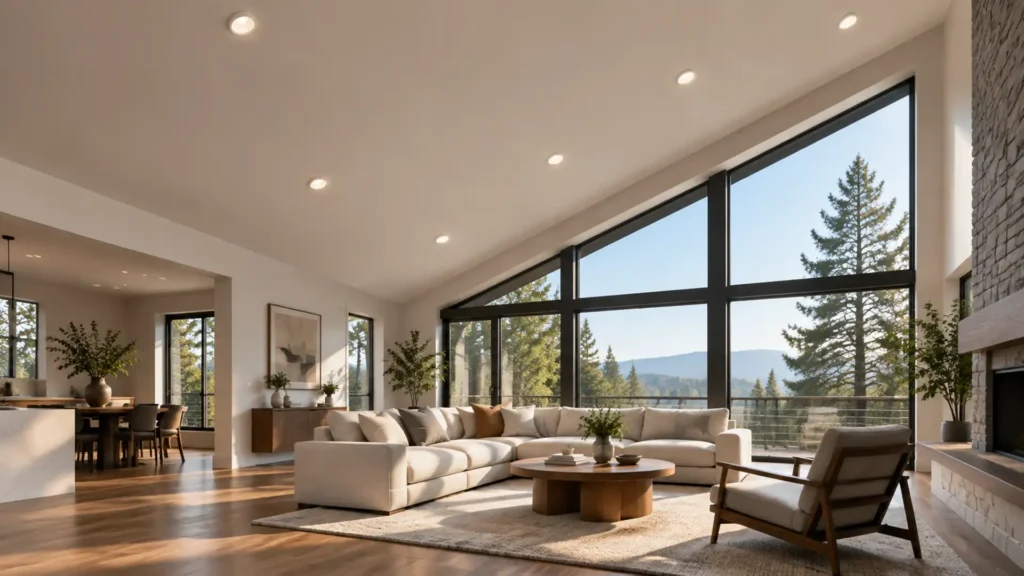
Installing recessed lights on a sloped ceiling is more than cutting holes and pressing fixtures into place. The ceiling angle changes which products are permitted and where the beam actually lands.
A fixture may sit flush in the drywall and still cause glare or leave the floor or work surface unevenly lit. Before any cutout, check the measured slope, the fixture’s permitted installation angle and the intended light direction. A suitable recessed light ceiling layout should account for the slope, fixture compatibility and intended beam direction.
This guide covers what to verify first, how to install compatible products, and how to diagnose lighting problems that show up after the ceiling is closed. For a broader map of recessed versus other downlight mounts, see the LED downlight installation methods guide.
باختصار شديد: Measure the ceiling slope and compare it with the manufacturer’s rated range. Prefer dedicated sloped-ceiling housings or adjustable designs that can aim the beam where you need it—not only fixtures that fit the hole. Isolate power, follow the product install steps, then check glare and coverage from real viewing positions. Physical fit is not the same as suitable light distribution.
جدول المحتويات
- 📋 1. What Should You Check Before Installing Recessed Lights on a Sloped Ceiling?
- 🔧 2. How to Install Recessed Lights on a Sloped Ceiling Step by Step
- 💡 3. Why Do Recessed Lights on a Sloped Ceiling Cause Glare or Uneven Lighting?
- خاتمة
- الأسئلة الشائعة
📋 1. What Should You Check Before Installing Recessed Lights on a Sloped Ceiling?
Finish the checks before you mark or cut. Changing a wrong cutout is far harder than changing a product choice.
Measure the Ceiling Slope
Measure the angle with a suitable inclinometer or angle finder, or calculate it from rise over horizontal run. Record the result in degrees (or pitch) the same way the manufacturer states its limit.
That measured value must fall inside the fixture’s permitted installation range. There is no universal maximum slope that applies to all recessed lights. Always check the permitted installation angle specified by the manufacturer. A number from another brand’s sheet is not a substitute for the label on the carton you are buying.
Confirm Fixture Compatibility
Products fall into rough groups:
- Dedicated sloped-ceiling housings or slope-rated systems built for a stated pitch range.
- Adjustable recessed lights (gimbals, adjustable modules) that can tilt the optic within a rated range.
- Standard fixed recessed lights aimed normal to the ceiling plane—often a poor match when the slope is steep and the target is a horizontal floor or task surface.
Confirm all of the following against the documentation:
- The fixture supports the measured ceiling angle.
- The fixture directs light toward the intended area; if it is adjustable, confirm that its aiming range is suitable for the ceiling slope and lighting task.
- Whether you need a dedicated sloped housing, an angled aperture or an adjustable mechanism.
- Why a flush trim does لا prove the beam will land correctly.
A documented residential example on Houzz describes a roughly 40-degree staircase slope where compact Halo-type fixtures were tried and did not distribute light evenly; a reply noted that one of those product lines was rated for about 30 degrees maximum. That case shows a compatibility mismatch on one install. It does not prove every recessed light fails above 30 degrees.
Ceiling construction also matters. For how downlight choices change with ceiling type more generally, see كيفية اختيار وحدات الإضاءة السفلية لأنواع الأسقف المختلفة.
Check the Installation Space and Layout
Before marking cutouts:
- Locate joists, wiring and other concealed services.
- Confirm cutout diameter and mounting depth from the product sheet—not from memory.
- Check insulation-contact (IC) ratings and required clearances where insulation is present.
- Plan positions with consistent reference lines along the slope.
- Think through how slope and aiming will change coverage on the floor or task plane below.
Use these reference lines to keep the recessed light layout consistent along the slope rather than applying a flat-ceiling grid.
🎯 What must be true before you cut the ceiling?
The measured slope is within the fixture’s rated range, the optic can aim at the target, and depth, cutout and clearances match the sheet.
🔧 2. How to Install Recessed Lights on a Sloped Ceiling Step by Step
Adapt every step to the manufacturer’s instructions and local electrical rules. This sequence is a framework, not a substitute for the product sheet.
- Isolate the power. Switch off the relevant circuit and verify that the supply is isolated before electrical work.
- Mark the fixture locations. Check the layout against joists, wiring and the planned coverage on the floor or task surface.
- Mark the cutouts. Use the manufacturer’s template and the specified opening size.
- Cut the openings. Work carefully to avoid damaging concealed wiring or the surrounding structure.
- Install the fixture or housing. Use only the mounting method listed for that product and ceiling build-up (new-construction frame, remodel clips, integrated LED canless unit and so on differ).
- Complete the electrical connections. Follow the wiring diagram and applicable regulations. Use a qualified electrician where required.
- Install the trim or light module. Seat it fully. Set any adjustable element to the intended aim before you walk away.
- Restore power and test. Confirm each fixture operates and that the beam points toward the intended area from normal viewing positions.
Do not treat one clip style or one wiring method as universal. Fixed wiring must be completed or checked by a qualified electrician where local rules require it.
🎯 Can one install method cover every recessed product?
No. New-construction, remodel and integrated LED systems mount and wire differently—follow the sheet for that fixture.
💡 3. Why Do Recessed Lights on a Sloped Ceiling Cause Glare or Uneven Lighting?
Correct mechanical install does not automatically produce comfortable or even light on a slope.
The Light Source Is Directly Visible
On a slope, a fixed optic that sits square to the ceiling plane can aim the bright source into a seating line of sight. Fixture orientation, aperture depth and shielding all change how often that happens.
Suitable options may include slope-rated optics, deeper baffles or adjustable modules that aim the beam away from eyes—evaluated for that angle and room, not promised as one universal fix.
The Light Does Not Reach the Intended Area Evenly
Permitted ceiling angle, beam distribution, mounting height along the slope, aim direction and distance to the target surface all shape the lit patch. Higher fixtures on a vault often need a different aim check than lower ones nearer the eaves.
For example, a fixture installed on a roughly 40-degree ceiling may produce uneven coverage if its rated slope limit is lower than the actual ceiling angle, even when the trim looks neat. That is a التوافق lesson for that combination—not a spacing formula for every room.
Where the project allows, review the manufacturer’s photometric data and mock up or test aim before cutting dozens of openings.
The Adjustable Fixture Looks Bulky or Exposes the Light Source
Some users prefer not to see a protruding gimbal or a dark gap when a trim is tilted. Internally adjustable or different trim styles can look cleaner in photos, but availability, cost and optical performance still depend on the product.
A flush appearance, a new trim or an adjustable mechanism does لا automatically remove glare. Check ceiling angle, viewing positions and the lighting task together.
Keep this section on problems that remain after install. Do not re-run the full pre-cut selection checklist from H2 1.
🎯 Why can a flush recessed light still glare on a slope?
Because the optic may aim into the sightline or miss the target plane even when the housing sits neatly in the ceiling.
خاتمة
Measure the ceiling slope, verify fixture compatibility, check the space, follow the product-specific install steps, then assess real light direction after power is restored.
A secure physical fit is necessary. Suitable lighting performance still has to be checked separately. A recessed fixture that fits the ceiling is not automatically the right fixture for the intended effect.
استكشف مقالاتنا ذات الصلة:
الأسئلة الشائعة
Recessed Lighting Configurations for Project Buyers
XHLUX supplies commercial مصابيح داون لايت LED and supports تصنيع المعدات الأصلية/تصميم المعدات الأصلية discussions for project-specific mounting and optical requirements. Contact our team to review your ceiling constraints and confirm the specifications available for the relevant product.
Send the measured ceiling angle, cutout constraints and the surface you need to light. Available slope capability, adjustability and insulation ratings depend on the specific product—confirm those specifications for the model under discussion.