 XHLUX
XHLUX

A showroom is not lit in the same way as an office, warehouse or corridor. The lighting has to help people understand the product: its shape, colour, surface texture and value.
That is why a showroom spotlight is usually specified for more than brightness. The beam angle, mounting method, aiming flexibility, colour rendering and glare control all affect how the space feels once the products are in place.
A bright showroom is not always a good showroom. If everything is lit evenly, nothing stands out. If the contrast is too strong, the space becomes uncomfortable. The better result usually comes from a controlled lighting layout where accent lighting supports the product display without drawing too much attention to the fixture itself.
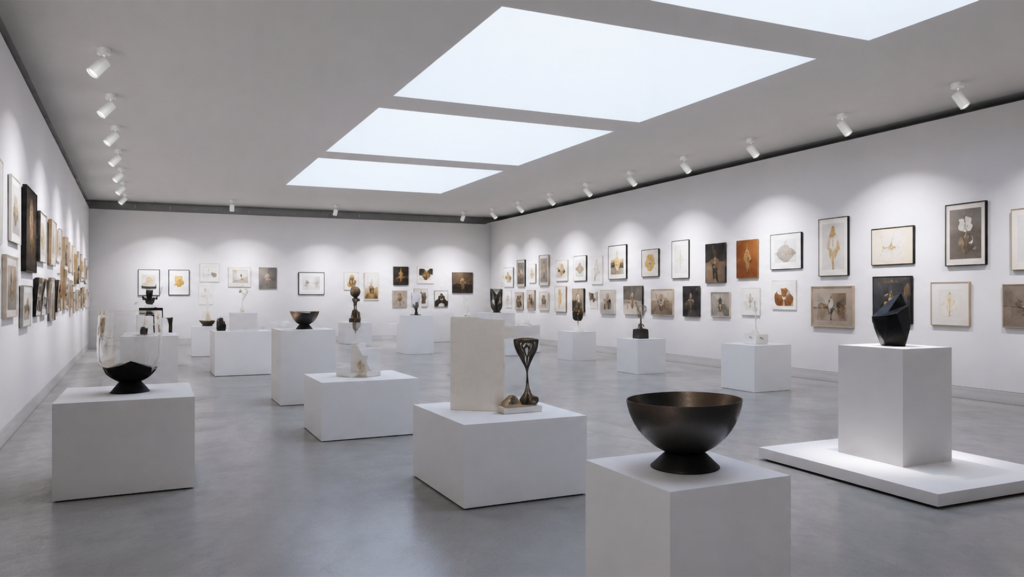
What should a showroom spotlight actually do?
The main job of a spotlight in a showroom is to create visual priority.
In a furniture showroom, that may mean pulling attention toward a sofa group or dining table. In a fashion store, it may mean highlighting mannequins, wall displays or new arrivals. In a car showroom, it may mean shaping reflections across the bodywork so the vehicle looks clean and dimensional.
This is different from general lighting. Ambient light fills the room. Spotlights decide where people look first.
A well-planned showroom lighting layout normally uses both. Ambient light keeps the space usable and comfortable. Spotlights add direction, contrast and focus. When the balance is right, customers can move through the space naturally while still noticing the products the designer wants to emphasize.
When does a ceiling spotlight make more sense than a recessed spotlight?
The ceiling structure often decides what type of spotlight is practical.
A surface-mounted ceiling spotlight is easier to install when there is limited ceiling depth or when the project is a renovation. It also keeps the fixture accessible for maintenance, replacement or re-aiming. In retail and showroom projects where the ceiling is exposed, dark, industrial or technical in style, a visible ceiling spotlight can look completely appropriate.
A recessed spotlight gives a cleaner ceiling appearance. Only the trim or opening is visible, so the lighting system feels more integrated into the architecture. This is often preferred in luxury retail, galleries, residential showrooms and high-end commercial interiors where ceiling clutter needs to be reduced.
Neither option is automatically better. A recessed spotlight may look cleaner, but it requires ceiling depth and more planning. A ceiling-mounted spotlight may be more visible, but it is often simpler to adjust and easier to maintain. The right choice depends on the ceiling condition, interior style and how much flexibility the space needs later.
Why does adjustability matter after the showroom opens?
Showrooms rarely stay the same for long.
Products move. Seasonal displays change. New collections arrive. Promotional areas are rebuilt. A lighting layout that works on opening day may not work six months later if the fixtures cannot be adjusted.
This is where an adjustable spotlight becomes important. Being able to tilt, rotate or re-aim the fixture allows the lighting to follow the display instead of forcing the display to fit the lighting.
For example, a narrow beam aimed at a single product may need to be redirected when that product is replaced by a larger display. A wall display may need a wider beam after shelving is changed. A corner that was originally secondary may become a feature area during a campaign.
Fixed-direction lights can work in stable interiors. But in active showroom environments, adjustability reduces the need for ceiling modification and makes future layout changes much easier.
What beam angle works for different display areas?
Beam angle should be selected according to the object size, mounting height and viewing distance.
A narrow beam, such as 15° or 24°, is normally used for focused accent lighting. It works well for individual products, feature displays, sculptures, mannequins or small areas where strong visual emphasis is needed.
A medium beam, around 36° or 38°, is often used for general product displays, shelving, furniture groups or retail zones where the light needs to cover more area without becoming too flat.
A wider beam, such as 50° or 60°, is useful when the goal is softer illumination across larger surfaces. It can help reduce harsh contrast, especially in spaces where the display area is broad or where customers stand close to the product.
The mistake is to use one beam angle across the entire showroom. Different products need different light distribution. A watch display, a sofa, a clothing wall and a vehicle body do not need the same beam. Mixing beam angles is often what makes the final result feel more natural.
Why does colour quality matter more than raw brightness?
Brightness is easy to increase. Colour quality is harder to fix after installation.
For product display, CRI is one of the key specifications. A high CRI LED spotlight helps colours appear closer to how they look under natural or high-quality reference light. This matters for fabrics, leather, wood, cosmetics, jewellery, artwork, food packaging and many other display categories.
A low-quality light source may make products look dull, grey, greenish or slightly distorted. Customers may not know the technical reason, but they can feel that the product does not look right.
Colour temperature also affects the atmosphere. Warm white light, such as 3000K, can make a showroom feel more comfortable and premium. Neutral white, such as 4000K, is often used for modern retail, furniture, commercial displays and technical products. Cooler light may be suitable in some electronics or contemporary environments, but it can feel harsh if the rest of the interior is warm.
The practical approach is to test colour temperature and CRI with the actual products, not only on a datasheet. A fixture that looks good on a white wall may behave differently on dark fabric, polished metal, wood veneer or glossy packaging.
Why are track spotlights used so often in showrooms?
For many showroom projects, track spotlights offer a level of flexibility that fixed ceiling fixtures cannot.
Displays change over time. New products arrive, layouts are adjusted, and promotional areas move. Being able to reposition or re-aim a spotlight without rebuilding the ceiling can make future updates much easier.
Another advantage is that different beam angles can be used within the same space. A narrow beam may be used to draw attention to a featured product, while a wider beam provides softer illumination for larger display areas. The combination usually produces a more comfortable and visually balanced result than trying to light everything evenly.
This is also the reason many showroom and retail projects use the XHLUX F2 Integrated LED Track Light. The series is designed for commercial accent lighting and offers multiple beam angle, CCT and CRI options, allowing designers to choose different configurations based on the products on display rather than using a single specification throughout the project.
Because the fixtures are mounted on a track system, adjustments can be made as display layouts evolve. This makes track-mounted spotlights suitable for furniture stores, fashion retail, showrooms and exhibition spaces where flexibility is part of everyday operation.
What usually causes poor showroom lighting?
Most showroom lighting problems come from the early specification stage.
One common issue is choosing fixtures only by wattage or lumen output. A high-output spotlight with the wrong beam angle can create glare, hot spots or uneven product illumination. A lower-output fixture with the right optical design may produce a better result.
Another problem is using only ambient lighting. This makes the space visible, but it does not create enough hierarchy. Products may appear flat, and customers may not know where to focus.
Glare is also often underestimated. If the light source is too exposed or aimed at the wrong angle, visitors may see the brightness of the fixture instead of the product. In showrooms, comfort matters because people often stay longer, compare details and walk through several display zones.
Poor planning for future changes is another common issue. A lighting layout may work for the first display arrangement, but become difficult to use when the showroom is updated. This is why adjustable fixtures and track systems are often considered early in the design process.
What should be checked before the fixture schedule is approved?
Before finalizing a showroom spotlight specification, several points should be reviewed together.
Ceiling height should be checked first. Higher ceilings usually require narrower beams or higher output to keep enough light on the product. Lower ceilings may need wider beams and better glare control to avoid discomfort.
The product type should also be considered. Glossy surfaces, dark materials, textured finishes and reflective packaging all respond differently to light. A car showroom, jewellery display, furniture gallery and clothing store may all use spotlights, but the optical requirements are not the same.
The fixture schedule should also include beam angle, colour temperature, CRI, dimming method and mounting type. These details are more useful than wattage alone. If the showroom has changing displays, the ability to adjust fixture position and aiming angle should be part of the decision.
It is also worth reviewing the relationship between ambient lighting and accent lighting. A showroom with strong spotlights but weak general light may feel dramatic but uncomfortable. A showroom with too much general light may feel bright but visually flat. The balance between the two usually determines whether the final space feels professional.
There is not a single spotlight that works for every showroom.
The right specification depends on the products being displayed, ceiling conditions, viewing distance and how often the layout changes over time.
For projects that require long-term flexibility, track-mounted spotlights are often worth considering alongside traditional ceiling or recessed options. Choosing the right beam angle, colour quality and fixture layout usually has a greater impact on the final result than simply increasing brightness.
Whether comparing different spotlight types or planning a new showroom project, the goal remains the same: present the products clearly and comfortably without making the lighting itself the focus.
If you are evaluating different showroom lighting options, you can also review the specifications of the XHLUX F2 Plus Integrated LED Track Light on xhlux.com to compare beam angles, CRI options and available configurations for commercial projects.