 XHLUX
XHLUX

Inhoudsopgave
- 2. Hotel Lighting Challenges and Low Glare Solutions
- 3. Office Lighting Challenges and Low Glare Solutions
- 4. Core Advantages of Low Glare Downlights
- 5. How to Choose the Right Low Glare Downlights for Hotels and Offices
- 6. FAQ: Low Glare Lighting for Hospitality and Workspaces
- 7. Data Chart: Glare and Energy Comparison
- 8. Conclusie
- 8. Related Content
Lighting is more than an afterthought—it shapes how people feel, focus, and interact with a space. In hotels, it defines first impressions, enhances ambiance, and influences guest satisfaction. In offices, the right lighting supports productivity, employee health, and professional aesthetics.
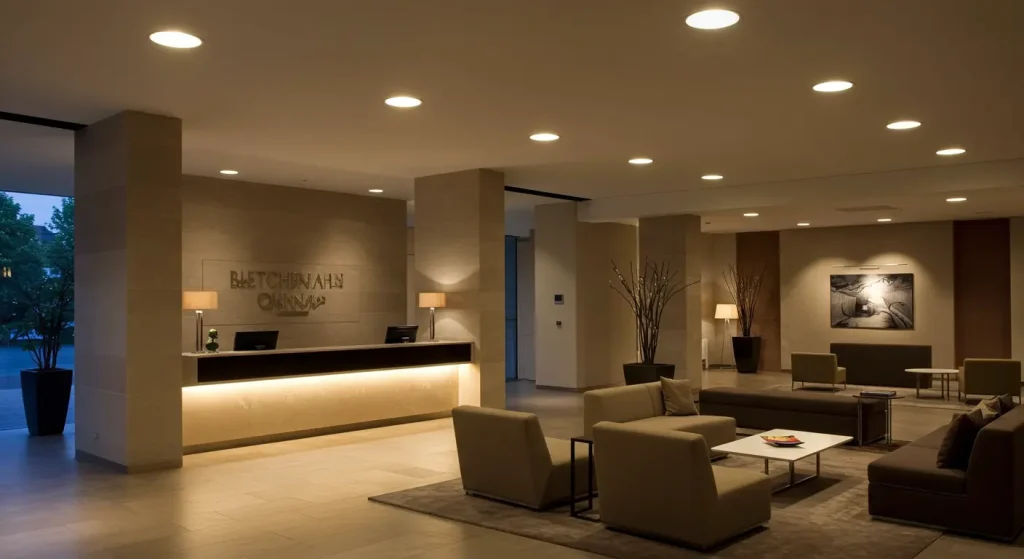
As hospitality and corporate environments evolve, low glare downlights are emerging as the preferred solution for achieving comfortable yet high-quality illumination. By reducing harsh reflections and controlling brightness, these fixtures create a more inviting atmosphere while aligning with modern energy and design standards.
This guide explains how low glare recessed downlights improve lighting in hotels and workplaces, why they outperform conventional luminaires, and how to choose the best options for your projects.
2. Hotel Lighting Challenges and Low Glare Solutions
2.1 Lobby and Reception Areas
Hotel lobbies are where guests form their first impressions. Bright, uncontrolled ceiling lights can feel harsh or sterile, diminishing the sense of luxury.
Low glare downlights offer:
- Softer, welcoming illumination that flatters décor.
- Reduced shadows on check-in desks and seating areas.
- A premium look that aligns with upscale interiors.
By using UGR<19 LED downlights with high CRI values, hotels can ensure comfortable brightness while showcasing design features like artwork, textured walls, and plants.
2.2 Guest Rooms and Corridors
Guest rooms should encourage rest, not strain the eyes. Glare from ceiling lights can interfere with relaxation or sleep.
Benefits of low glare fixtures:
- Subtle, diffuse lighting that creates a peaceful ambiance.
- Better light control for reading corners, bedside tables, and hallways.
- Enhanced safety along corridors without disturbing the calm atmosphere.
Tip: Pair anti-glare LED downlights with dimming controls to let guests adjust brightness to their preference.
2.3 Restaurants and Conference Halls
Hospitality lighting must balance functionality and mood. Dining spaces and meeting rooms require brightness for clarity while maintaining visual comfort.
Low glare recessed luminaires:
- Deliver uniform light, preventing “hot spots” on tables or presentation screens.
- Help guests enjoy meals or focus during business sessions without squinting.
- Offer flexible beam angles, making them suitable for buffet zones, stage areas, or breakout rooms.
3. Office Lighting Challenges and Low Glare Solutions
3.1 Workstation Areas
Glare from standard downlights reflects off computer screens, causing eye fatigue and reducing focus.
Low glare lighting helps by:
- Directing beams downward with minimal side glare.
- Supporting longer screen time without discomfort.
- Contributing to higher work accuracy and fewer errors.
A workplace study (Lighting Research Center, 2024) found employees under UGR<19 lighting reported 20% fewer visual complaints than those under uncontrolled luminaires.
3.2 Meeting and Training Rooms
Presentation spaces often combine screens with ceiling lights, leading to distracting reflections.
LED-downlights met verblindingscontrole:
- Distribute light evenly across tables and walls.
- Prevent excessive brightness that competes with projected content.
- Encourage better participation and communication.
3.3 Common Areas and Corridors
Corridors, lounges, and break zones require safe yet comfortable lighting. Overly bright fixtures create sterile vibes, while dim lights risk accidents.
Low glare ceiling lights provide:
- Consistent illumination for navigation.
- A warm, professional tone that reflects corporate branding.
- Lower energy use compared to older recessed lamps.
4. Core Advantages of Low Glare Downlights
| Voordeel | Beschrijving | Invloed |
|---|---|---|
| Eye Comfort | Reduced harshness, UGR <19 | Less fatigue for guests & staff |
| Aesthetic Quality | Smooth light layers enhance décor | Elevates perceived luxury |
| Lighting Performance | Better optical design, uniform spread | Complies with hospitality & office standards |
| Brand Value | Professional image & guest satisfaction | Adds long-term project worth |
| Energie-efficiëntie | High lm/W, dimmable LEDs | Cuts operating costs |
Modern anti-glare fixtures often combine deep reflectors, prismatic lenses, and precise beam control, making them versatile for high-end commercial spaces.
5. How to Choose the Right Low Glare Downlights for Hotels and Offices
When specifying luminaires, evaluate these parameters:
| Specificatie | Aanbeveling | Waarom het belangrijk is |
|---|---|---|
| Uniforme verblindingsclassificatie (UGR) | <19 for offices, <22 for lounges | Ensures visual comfort |
| Kleurweergave-index (CRI) | ≥90 | Accurately presents food, fabrics, or art |
| Kleurtemperatuur (CCT) | 2700–3000K voor de horeca, 3500–4000K voor kantoren | Sets the tone |
| Straalhoek | 24° for accents, 60° for general | Matches function |
| Dimming Options | DALI, 0–10V, or smart apps | Flexibility for events or moods |
| Energie-efficiëntie | ≥90 lumens/Watt | Reduces bills |
| Build & Certification | Sturdy housing, CE/RoHS/UL listed | Guarantees safety & longevity |
Pro-tip: Always coordinate lighting layouts with interior designers to integrate fixtures seamlessly into ceilings and architectural details.
6. FAQ: Low Glare Lighting for Hospitality and Workspaces
Q1: What makes a downlight “low glare”?
It uses recessed optics, deep trims, or micro-louvers to shield the LED source and manage brightness.
Q2: Are low glare downlights suitable for retrofits?
Yes. Many come with adjustable brackets or slim housings that fit standard ceiling cut-outs.
Q3: Will I lose brightness by choosing glare-free fixtures?
Quality designs maintain lumen output while diffusing beams, so rooms stay bright without discomfort.
Q4: How do I calculate how many fixtures I need?
Use photometric planning software or consult a lighting supplier to ensure optimal spacing and uniformity.
Q5: What is the ROI for hotels and offices?
Energy savings plus improved guest or staff satisfaction typically offset the higher purchase price within 12–24 months.
7. Data Chart: Glare and Energy Comparison
| Armatuurtype | UGR-waarde | Energy Use (W) | User Comfort (1–10) | Typische toepassingen |
|---|---|---|---|---|
| Standaard LED-downlight | 24 | 18 | 6 | Budget offices, basic halls |
| LED met lage verblinding (UGR<19) | 17 | 15 | 9 | Hotels, premium offices |
| CFL Recessed Lamp | 22 | 26 | 5 | Older meeting rooms |
Comfort scores are based on occupant surveys across hospitality and workplace environments.
8. Conclusie
In hospitality and corporate settings, lighting shapes mood, safety, and brand perception. Low glare recessed downlights bring together comfort, style, and energy performance—helping hotels welcome guests in style and offices nurture focused, healthy teams.
Whether you’re an interior designer planning a boutique hotel, a contractor outfitting a co-working space, or a distributor looking to expand your portfolio, glare-free luminaires deliver measurable value.
👉 Take the next step:
- Request a consultation to design the ideal lighting plan.
- Ask for product samples or photometric layouts.
- Partner with us for advanced Verlichtingsoplossingen met weinig verblinding that enhance every corner of your project.
8. Related Content
Wat is een downlight met lage verblinding? Voordelen voor moderne ruimtes
Downlights met lage verblinding versus standaard downlights: de belangrijkste verschillen
How a Reliable Downlight Manufacturer Improves Lighting Design
Waarop te letten bij de keuze van een fabrikant van inbouwspots voor moderne projecten?
Downlight Manufacturer vs. Wholesaler: Which Option Saves More?
Downlights met lage verblinding versus inbouwspots: welke is beter?